AWF Statement Ahead of the UN Biodiversity COP17
General Inquiries
Tel:+254 711 063 000
Ngong Road, Karen, P.O. Box 310
00502 Nairobi, Kenya
The African Wildlife Foundation (AWF) believes that the Seventeenth Meeting of the Conference of the Parties to the Convention on Biological Diversity (CBD COP17), to be held in Yerevan, Armenia from 19-30 October, 2026 must mark a decisive shift from global biodiversity commitments to accelerated, African-led implementation that delivers for people, wildlife and ecosystems.
As the first global review of collective progress under the Kunming–Montreal Global Biodiversity Framework (KMGBF), this UN Biodiversity COP17 Conference is a moment of accountability. Fewer than half of Parties consider any of their national targets to be on track, and the 2025 milestone of USD 20 billion per year in international biodiversity finance has fallen short. AWF calls on Parties to turn the review into an acceleration mechanism, with clear actions to close implementation, finance, institutional and capacity gaps before 2030, and to measure success through outcomes for ecosystems, species and people.
AWF Key Calls for CBD COP17
1. Ecological Integrity and Connectivity
Africa needs protected and conserved areas that are well managed, connected and resilient, not just larger.
- Define success on 30x30 (KMGBF Target 3) through ecological integrity, connectivity, effective management and equitable governance, not hectares alone, as part of implementing Targets 1–3.
- Adopt the recommendation of the 28th meeting of the Subsidiary Body on Scientific, Technical and Technological Advice (SBSTTA-28) to rename the Programme of Work on Protected Areas the Programme of Work on Protected and Conserved Areas (PoWPCA), recognizing other effective area-based conservation measures (OECMs) and Indigenous and Traditional Territories as equal components, with ecological connectivity as a resourced element.
- Integrate biodiversity early into spatial planning, infrastructure, extractive and investment decisions, so that development maintains ecological integrity.
2. People and Nature
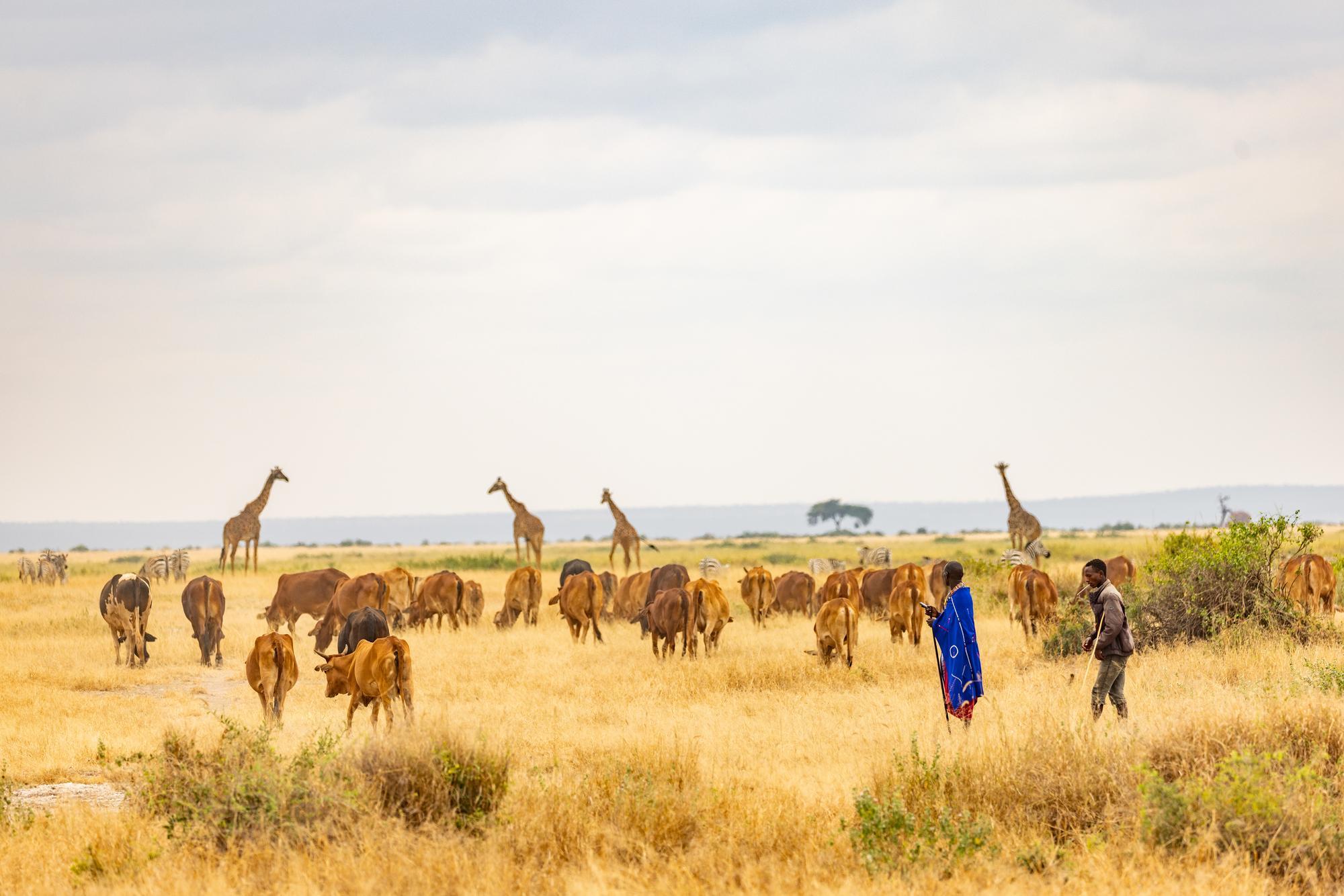
Conservation lasts only when the people who live with wildlife benefit from it and help decide how it works.
- Strengthen the rights, agency and benefits of Indigenous Peoples and local communities (IPLCs) as rights-holders, decision-makers, partners and beneficiaries, including appropriate direct access to conservation finance.
- Adopt the voluntary guidance on sustainable wildlife management as the standard for sustainable use under the KMGBF—use that is science-based, legal, effectively governed and ecologically sustainable.
- Make human–wildlife coexistence a funded priority, with dedicated investment and implementation guidance.
- Adopt the draft Global Plan of Action for education on biodiversity and embed education in national biodiversity strategies and action plans (NBSAPs) and National Reports.
3. Sustainable Conservation Finance
Finance must move from global commitments to African landscapes.
- Deliver on Target 19 with predictable and accessible international biodiversity finance, simpler access to multilateral biodiversity and climate finance, and more resources reaching African institutions, landscapes and communities.
- Connect biodiversity and climate finance, including adopting the PoWPCA’s complementary activities on climate change.
- Build Africa’s biodiversity economy through responsible nature-based enterprise, with strong environmental and social safeguards and fair benefits for communities.
Biodiversity Is a Development Asset
Africa’s biodiversity is not a constraint to development; it is natural infrastructure supporting water and food security, livelihoods, climate resilience and economic opportunity. AWF remains committed to work with African governments, the African Union, Regional Economic Communities, protected area authorities, communities, civil society, development partners and the private sector to translate the KMGBF into African-led solutions that deliver for people and nature.
Read the full AWF position statement here.
For any media queries, contact Eileen Kairu, Strategic Communications Manager at: [email protected]