Counting What Nature Is Worth: A New Toolkit Makes an Economic Case for Africa’s Wildlife
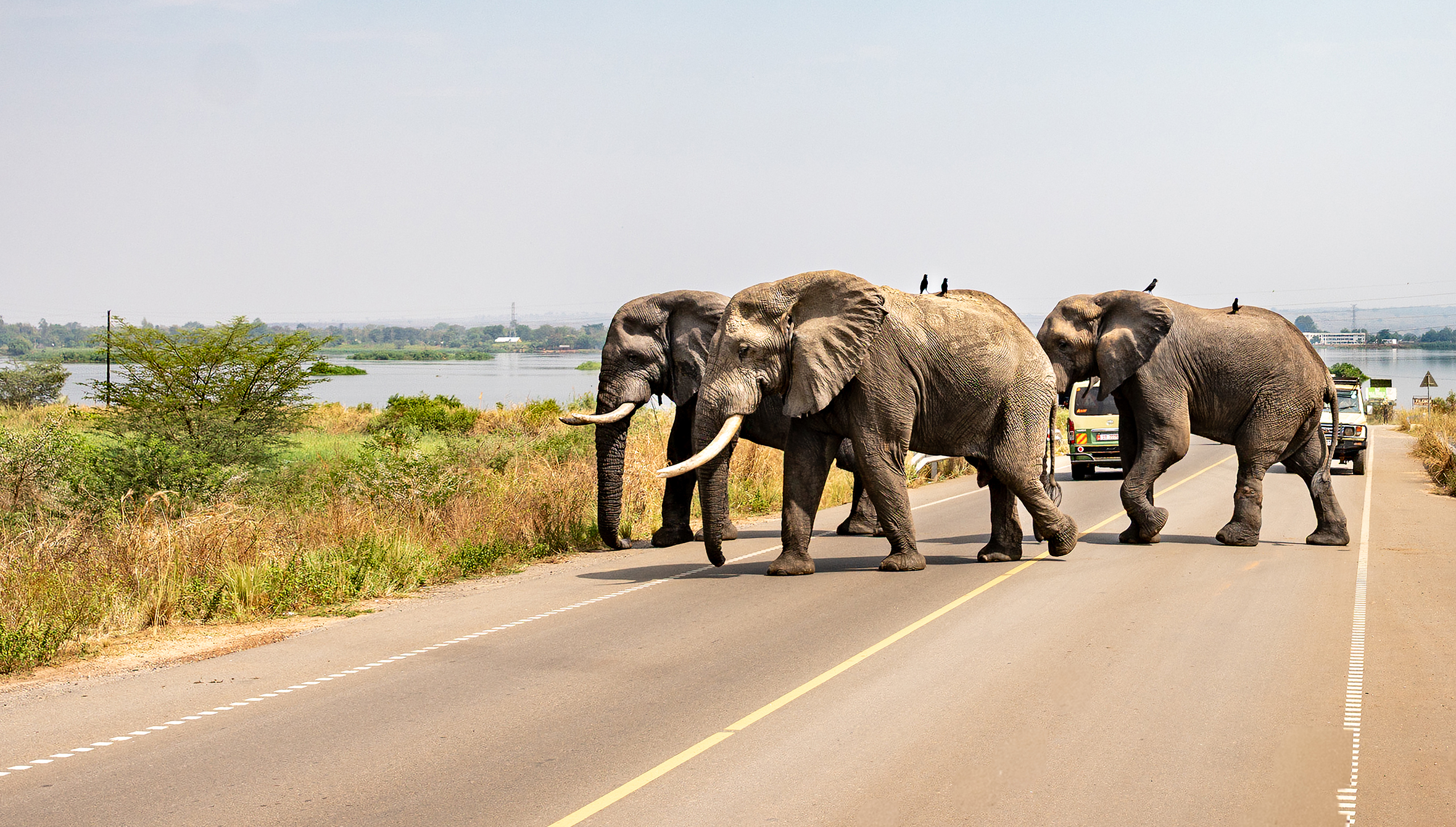
Elephants cross a road near the entrance to the Murchison Falls National Park, Uganda.
Biodiversity economies use nature, including wildlife, plants and ecosystems, as assets to create economic value in ways that support conservation and sustainable development. At the African Wildlife Foundation (AWF), we work with governments and partners to measure that value and bring it into national budgets and investment decisions. The Wildlife Economies Decision and Investment Support Toolkit is part of this work, giving countries a practical way to understand what their wildlife is worth and make the case for investing in it.
What is Africa’s wildlife worth for its economy? Not just in tourism revenue, but in jobs, businesses, livelihoods and the natural resources that support development. And when governments decide where to build a road, expand agriculture or direct public investment, how much of that value is taken into account?
These questions expose a gap in how Africa plans for its future. Wildlife generates economic value, yet much of it remains invisible in national budgets, statistics and investment decisions. As a result, one of the continent’s greatest natural assets is often overlooked when development priorities are set.
A new Wildlife Economies Decision and Investment Support Toolkit, launched by the African Wildlife Foundation, the African Leadership University (ALU) School of Wildlife Conservation and the Conservation Strategy Fund (CSF), could help change that.
The toolkit offers governments and other stakeholders a practical way to understand what their wildlife economies are worth, identify growth opportunities and make stronger cases for investment.
For Edwin Tambara, AWF’s Director of Global Leadership, the challenge became clear when a finance minister asked him, “How exactly does biodiversity wildlife contribute to Africa’s economies?”
It is a question conservationists understand but one they have not always been able to answer in the language of economic planning.
Turning Natural Wealth into Economic Opportunity
Africa does not lack wildlife resources or ideas for developing them. What is often missing is a clear picture of their economic contribution and a coordinated approach to investment.
Tambara described wildlife initiatives across the continent as projects that “often remain fragmented. They’re ad hoc”, with disconnected funding streams. Meanwhile, nature is frequently left out of the accounts and budgets that guide government decisions.
This is where the toolkit proves particularly valuable. Dr Sue Snyman, ALU’s Research Director, described its purpose as turning “evidence into decisions and decisions into investable action”. Rather than producing another report that identifies challenges, it helps users understand their wildlife assets, examine policies and investment opportunities and develop practical strategies for growth.
Its eight modules are organised into two phases: understanding the wildlife economy and developing it. Countries can use the components most relevant to their circumstances rather than following a rigid process.
For governments, this is a powerful resource. A clearer understanding of wildlife’s economic contribution can strengthen budget proposals, reveal overlooked business opportunities and help attract investors who need credible evidence before committing funds.
It could also change how development choices are made. Consider a proposed road through a wildlife corridor. The benefits of improved transport may be clear, but what about the economic losses from disrupted animal movement, damaged habitats or reduced tourism activity?
Tambara explained that better information could show decision-makers what would be lost if a road passed through a particular landscape, both for nature and wildlife-related businesses. The objective is not to stop development, but to ensure that its full costs and benefits are understood before decisions are made.
Making Wildlife Investment Work
For Mark Gerrard, Africa Director at CSF, the challenge extends beyond recognising wildlife’s value. Economic opportunities must also be presented in ways that investors can understand and support.
“Finance plays a strong role in driving decision making and yet many opportunities aligned with sustainable, wildlife economies are often poorly framed to attract such investment,” Gerrard explained.
The toolkit helps bridge that gap by connecting economic analysis with project preparation, environmental safeguards and accountability. This matters because promising wildlife enterprises can struggle to secure financing when their business models, risks or expected returns are unclear.
Gerrard also emphasised the toolkit’s flexibility. It is intended for governments, conservation organisations, researchers, communities, development partners and investors, each approaching it with different needs.
Rather than prescribing one solution, it encourages users to begin with the decision they are trying to make. But investment cannot come at any cost. Snyman cautioned that the goal is not simply to expand the wildlife economy as much as possible. Growth must respect ecological limits and ensure communities receive fair benefits.
That distinction is critical in landscapes where people live alongside wildlife, often bearing the costs of conservation. Without clear rights, meaningful participation and tangible economic returns, wildlife investment risks creating conflict rather than opportunity.
What Zimbabwe Can Teach Other Countries
Zimbabwe offers an important example of what putting this approach into practice can involve. During the webinar, speakers explained how the pilot brought together institutions that rarely feature in traditional conservation discussions, including Parliament, the central bank, the national statistics department and the export agency.
Their participation marked an important shift. Wildlife was no longer discussed only by conservation authorities, but also by institutions responsible for economic information, finance, trade and national development.
This is where the model holds promise for other African countries. When economic institutions become involved, wildlife has a better chance of being recognised in the decisions that shape public investment and national priorities.
The process was not quick. Snyman noted that the Zimbabwe pilot took years, highlighting the importance of sustained cooperation and institutional commitment. Tambara stressed that simply producing a report and presenting it to government “is not going to work”. Governments must lead national processes, while people working within individual landscapes must help shape local priorities.
Zimbabwe’s experience therefore offers a lesson rather than a ready-made formula: meaningful progress depends on bringing the right institutions together and ensuring they own the process.
A Tool for Better Investment Decisions
The toolkit’s greatest opportunity lies in changing how African governments view wildlife: not as a separate conservation concern, but as part of their economic development agenda.
Used well, it could help countries identify where investment makes sense, strengthen wildlife-related enterprises, improve coordination between institutions and make better decisions about competing land uses.
But a toolkit alone cannot deliver those outcomes. Its value will depend on whether governments act on the evidence, investors recognise the opportunities and communities share the benefits.
As Tambara reminded participants at the launch, “This is your toolkit”.
Africa’s wildlife has always had value. The challenge now is to make that value count where it matters most—in the policies, budgets and investments shaping the continent’s future.
Read the full Wildlife Economies Decision and Investment Support Toolkit and its overview for decision-makers.
Watch the full webinar here.