From Vulnerability to Resilience: How Climate-Smart Rice Farming Is Strengthening Livelihoods and Conservation in Cameroon’s Faro
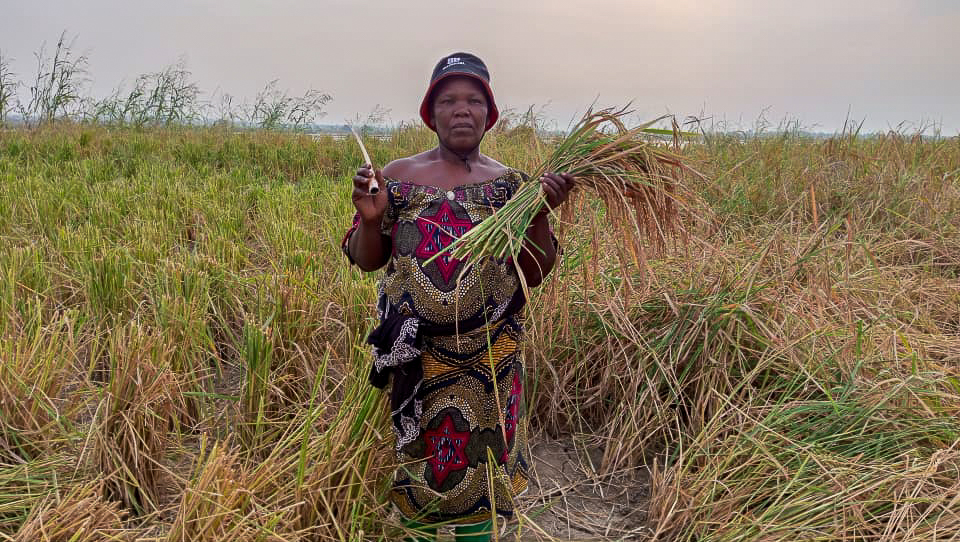
Aminatou Koffa stands in her rice field after the harvest.
On the boundary of Faro National Park in northern Cameroon, communities face growing climate pressures. Prolonged dry seasons and increasingly intense floods have made farming unpredictable, threatening food security and household incomes. In villages such as Tchamba, these pressures have historically pushed families toward harmful coping strategies, including hunting and logging inside the park.
For households like that of Aminatou Koffa, a 45-year-old mother and farmer, the challenge was acute. Rice—a staple food for most Cameroonian families—was often unaffordable. A 25kg bag costs approximately USD $30, placing it beyond reach for many households whose monthly incomes are only marginally higher.
The CaSeVe project was designed to address this cycle of vulnerability by strengthening community livelihoods while reducing pressure on Faro National Park.
Investing in Community-Led Solutions
Funded by the European Union and implemented with technical support from the African Wildlife Foundation (AWF) and partners, the CaSeVe project promotes climate-smart agriculture as a pathway to resilience. A key investment under the project is the Rural Resource Center in Faro, established by CIFOR/ICRAF in collaboration with AWF.
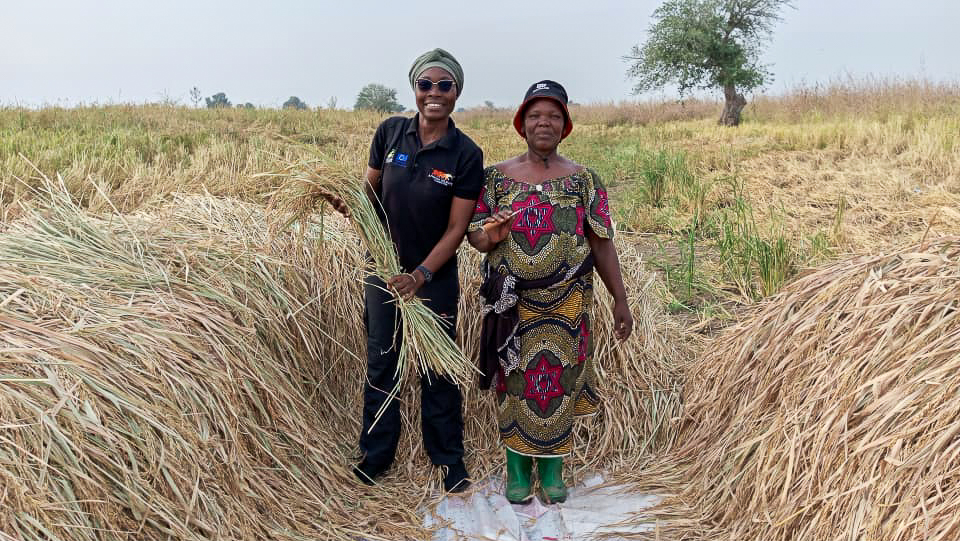
Aminatou Koffa and AWF Community Liaison Blandine Moueni together in the rice field.
The center provides hands-on training in rice production, sustainable land management, and collective farming models, with a strong focus on women and youth. These investments are already delivering measurable benefits at household and community levels.
“Rice farming has brought a lot of change in my life,” says Aminatou.
Through a communal production model, farmers divide each harvest into three clear streams: rice for household consumption, seed for future planting, and surplus for sale. This approach ensures immediate food security while building longer-term economic stability.
Tangible Impacts on Households and Incomes
Income from rice sales has enabled families to meet essential needs. Aminatou used her earnings to buy school uniforms and notebooks, allowing her children to attend school consistently—an outcome that directly links livelihood support to improved education outcomes.
“Thanks to this project, I was able to add to my livestock,” she explains.
Today, 223 families are actively cultivating rice under the project, significantly reducing the risk of food shortages and malnutrition. For participating households, food security has shifted from uncertainty to predictability.
“Presently, the problem of food is no longer an issue at my house,” Aminatou says.
Beyond her own family, Aminatou has become an advocate for women’s participation, encouraging others to engage in collective farming and training opportunities.
Scaling Impact Through Collaboration
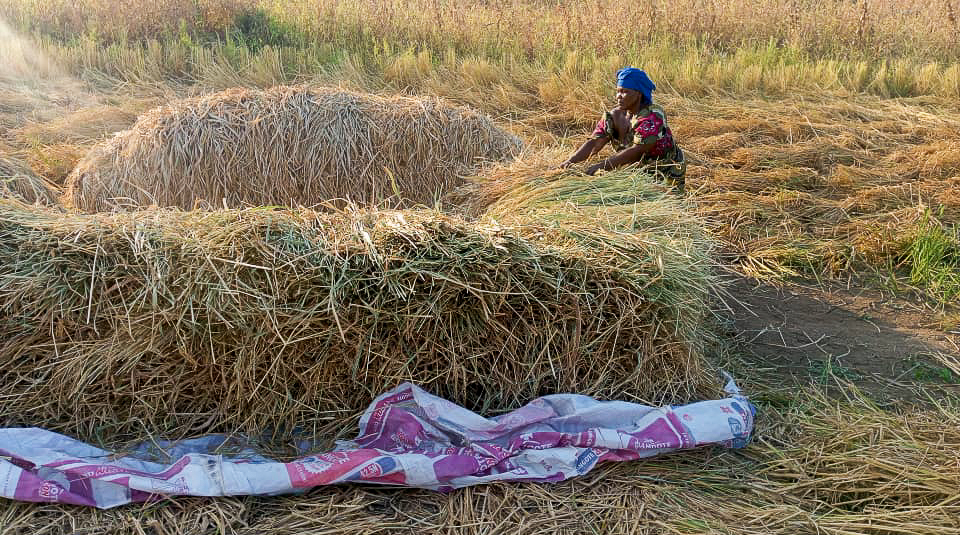
Aminatou Koffa showcases her rice harvest against a backdrop of open fields and distant mountains, reflecting resilience, self-reliance, and pride in rural livelihoods.
A core innovation of the CaSeVe project is its emphasis on collective action. Where farmers once worked in isolation, they now cultivate shared plots and participate in an organized rice value chain supported by AWF and partners.
“Before the project, everyone worked separately,” says Abdoukadiri Aliou, a young father of two. “AWF helped us understand the value of collaboration and introduced improved farming techniques.”
Currently, 242 families are connected through the rice value chain. The first dry season harvest yielded 223 bags of rice, directly benefiting 25 households and demonstrating the viability of dry season production.
The project plans to scale cultivation from 17 to 45 hectares, with a projected output of 130.5 tonnes of paddy rice at full capacity—significantly strengthening local supply and incomes.
Aligning Livelihoods With Conservation Outcomes
Improved and reliable incomes are translating into conservation gains. As rice farming becomes a dependable livelihood, reliance on activities such as hunting and logging within Faro National Park has declined.
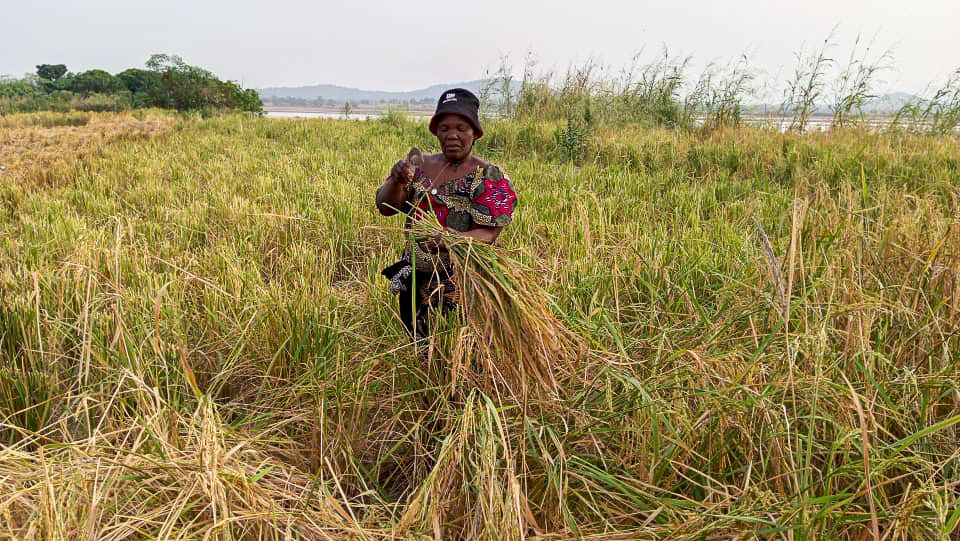
Aminatou Koffa harvesting rice, with the surrounding mountains forming a quiet backdrop to her work.
“By providing a sustainable income source like rice farming, we are addressing community needs while reducing pressure on the park’s natural resources,” says Blandine Moueni, AWF’s Community Liaison Officer. “People are seeing that conservation and prosperity can go hand in hand.”
The CaSeVe project demonstrates how targeted donor investment can deliver integrated outcomes across food security, income generation, gender inclusion, and biodiversity conservation. Its model—grounded in community leadership and climate-smart practices—offers strong potential for replication in similar landscapes across Africa.
In Faro, once-degraded fields now represent resilience and opportunity. For families like Aminatou’s, donor-supported investments are not only improving daily life but also securing the future of the park and the communities that depend on it.