From Conflict to Coexistence: How Communities and Wildlife Thrive Together
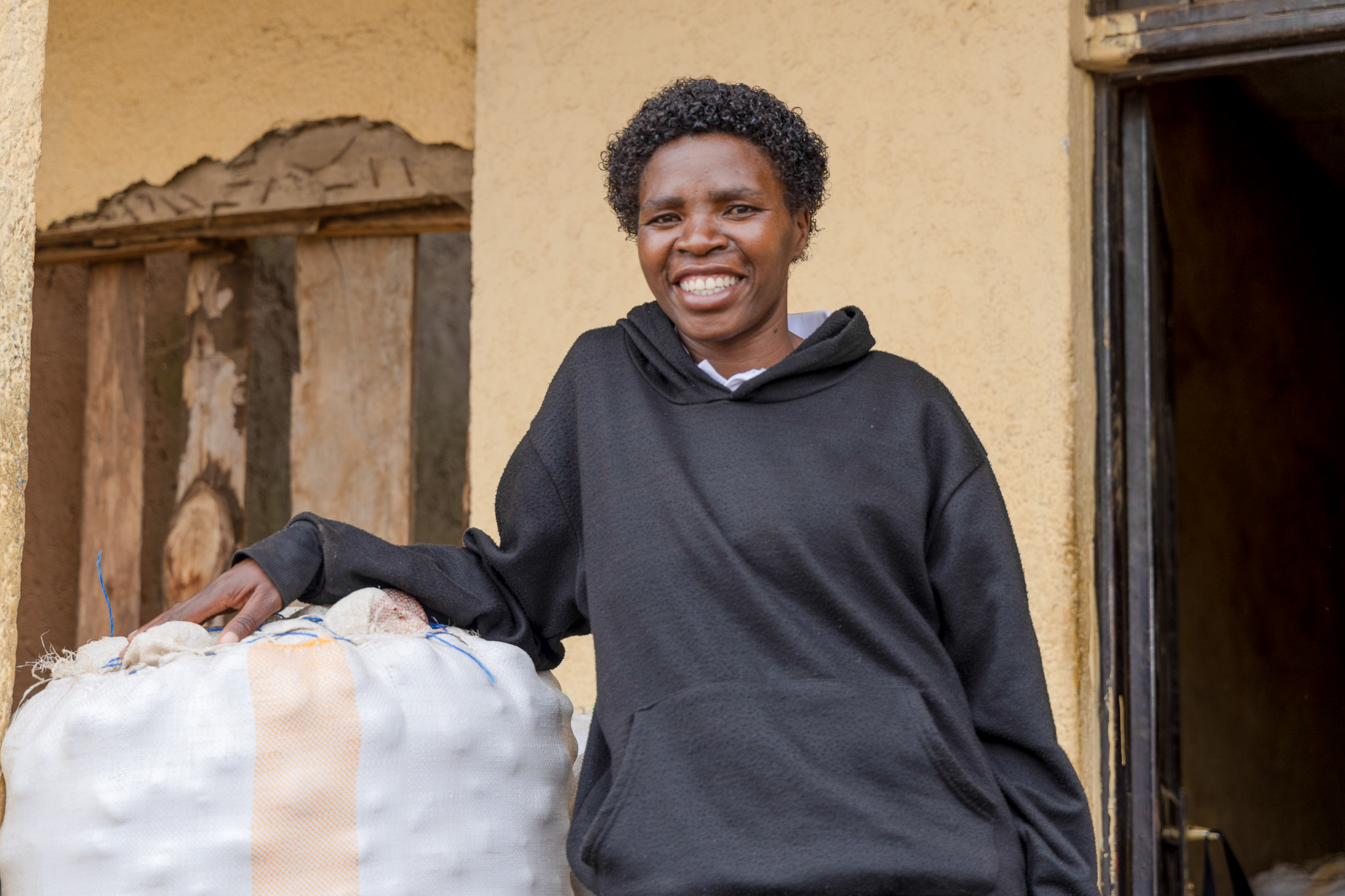
Mukarwego Agnes standing beside stored Irish potatoes, a key commodity in her agribusiness.
Living near Volcanoes National Park, Mukarwego Agnes often had her crops raided by buffaloes and monkeys. She recalls how quickly conflicts could start. In those days, people would usually kill any buffalo or monkey they found.
“Back then, conservation felt more like a punishment than a promise,” she says.
Volcanoes National Park shelters one of the world’s rarest creatures: the mountain gorilla. Through determined conservation efforts by the African Wildlife Foundation (AWF) and other partners, their numbers have climbed from just 400 in the 1990s to more than 1,000 across Rwanda, Uganda, and the Democratic Republic of the Congo. Yet, the battle is far from over. Habitat loss and fragmentation loom as persistent threats.
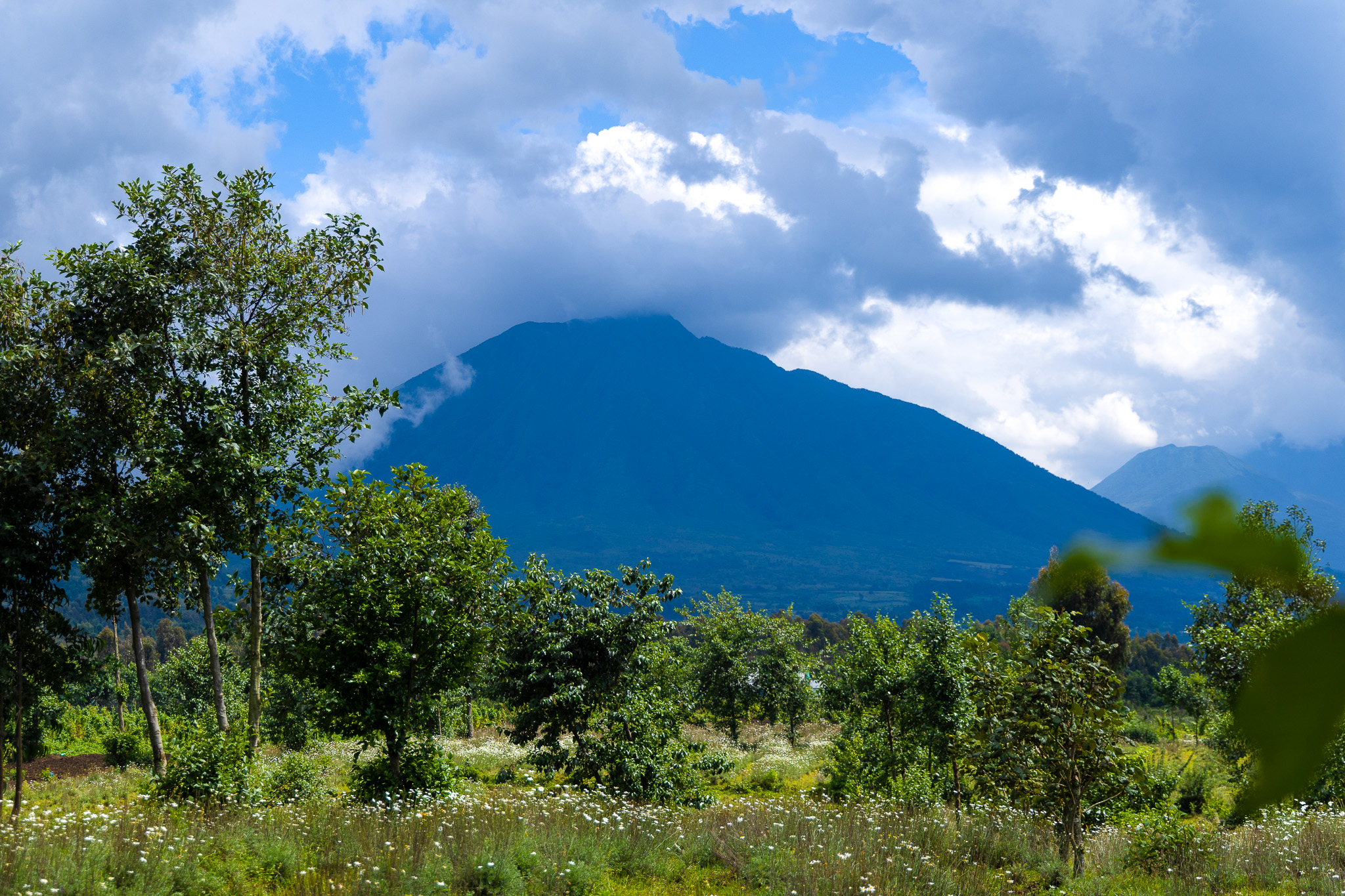
Volcanoes National Park rises above surrounding farmland in northern Rwanda.
To build on this progress, Rwanda plans to expand the park’s boundaries by 23 percent. This change will affect about 600 households living nearby. Agnes’s family is among those selected to relocate to a new village—an opportunity promising safer homes, new livelihoods, and a genuine stake in conservation’s future.
At first, the idea of moving made people afraid. “We weren’t all on the same page regarding this program. Some of us thought that we would be living a worse life,” Agnes says.
Training Turned Land Shortages Into a Business Opportunity
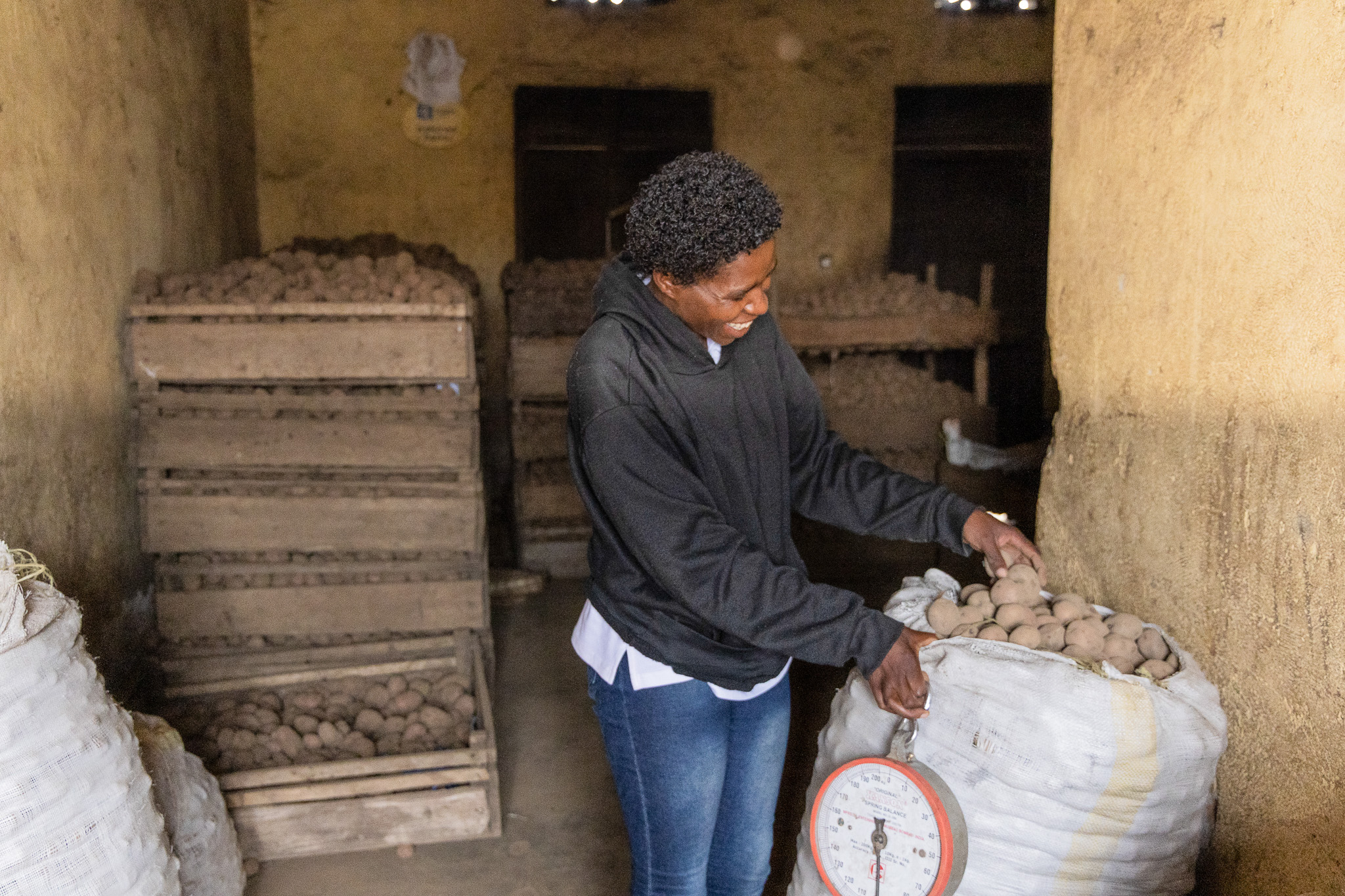
Agnes weighs sacks of Irish potatoes in her storage space.
AWF worked with the Rwanda Development Board (RDB) to help communities that might be affected. They offered business training and new ways for people to earn a living as part of the relocation.
“AWF provided us with regular training on how to start small businesses for personal development. During these sessions, I realized that with the park's expansion, access to land would become more limited. That understanding pushed me to shift my focus to buying produce from farmers who still have land and selling it at the wholesale level,” Agnes says.
When Agnes joined the program, she started with about 200 kilograms of Irish potatoes. Soon, she moved from farming to buying produce from other farmers, storing it, and selling it in bulk.
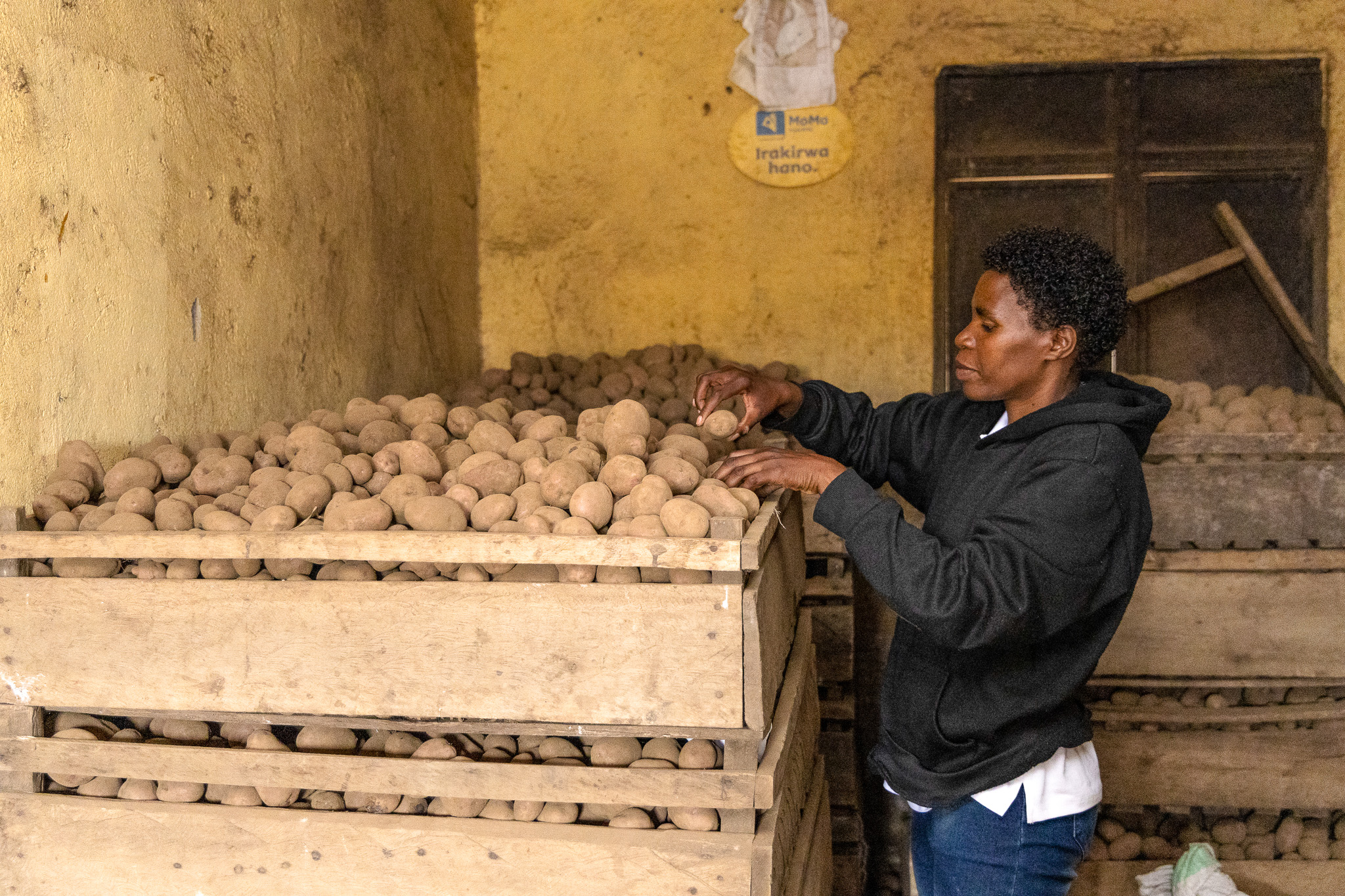
Agnes sorts and stores potatoes for wholesale.
But that was only the start. With help from a revolving fund supported by AWF and RDB, she got a 600,000 RWF loan that helped her expand her business. Now, her business has grown many times over, and the money she earns not only supports her work but also pays for her children’s education.
“Before this support, I was operating with very little capital. Access to credit enabled me grow myself and my business,” she says.
The program Agnes participated in equips entrepreneurs with the skills and confidence to build climate-friendly businesses, empowering families as they prepare for a new chapter in the village.
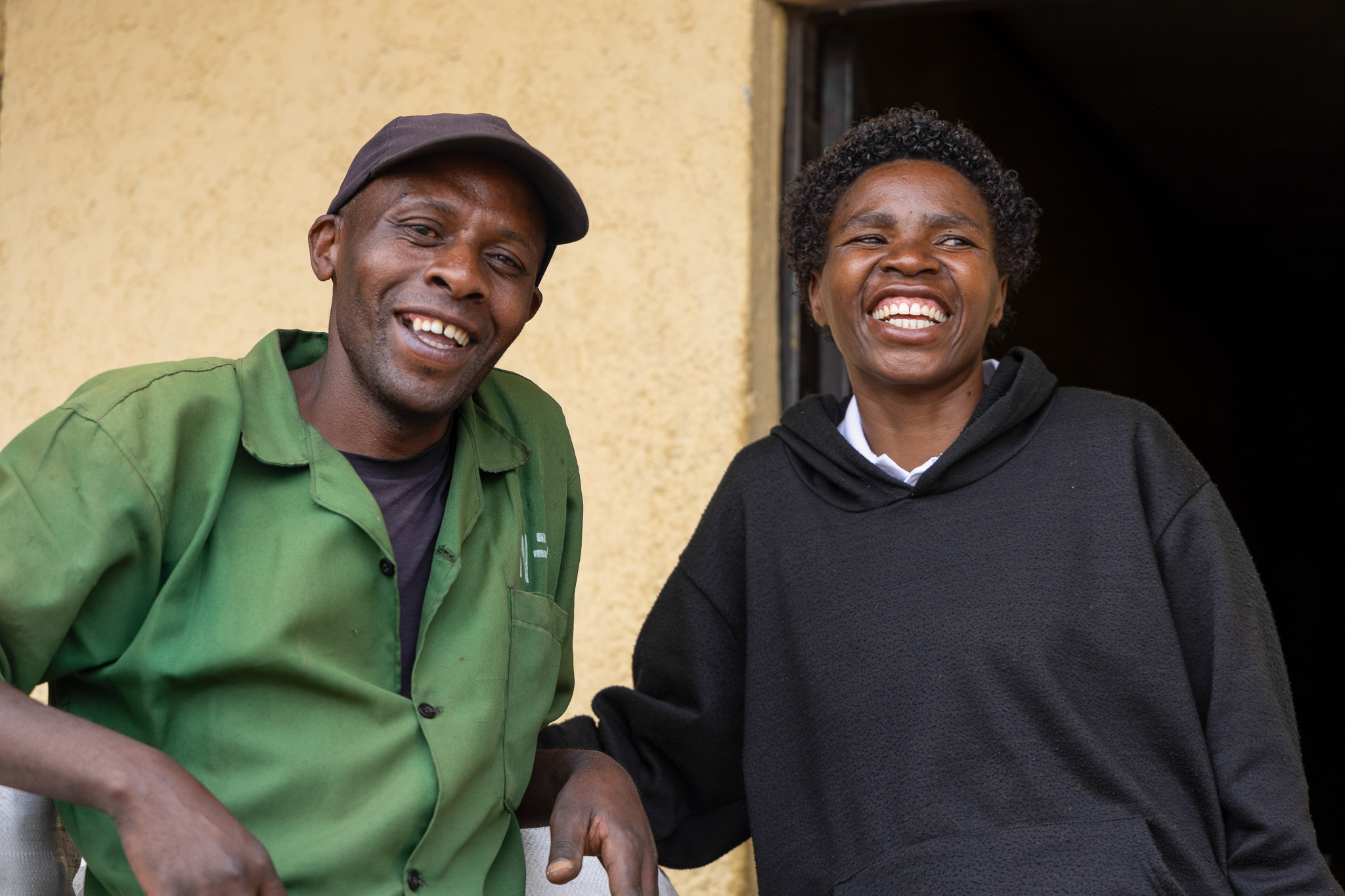
Mukarwego Agnes with a community member outside her home in the Virungas landscape.
Looking After Both People and Wildlife
For Agnes, the move is still ongoing. “I am deeply grateful to AWF, RDB, and the Government of Rwanda for prioritizing our relocation to a safer area, where both people and wildlife can be protected. This will allow us to live peacefully,” she says.
Her story highlights the stakes in Volcanoes National Park: gorilla conservation will endure only if nearby communities can build secure livelihoods and see conservation as an opportunity worth protecting.