Uganda’s 2025 Conservation Journey: Building the Foundations for 2026
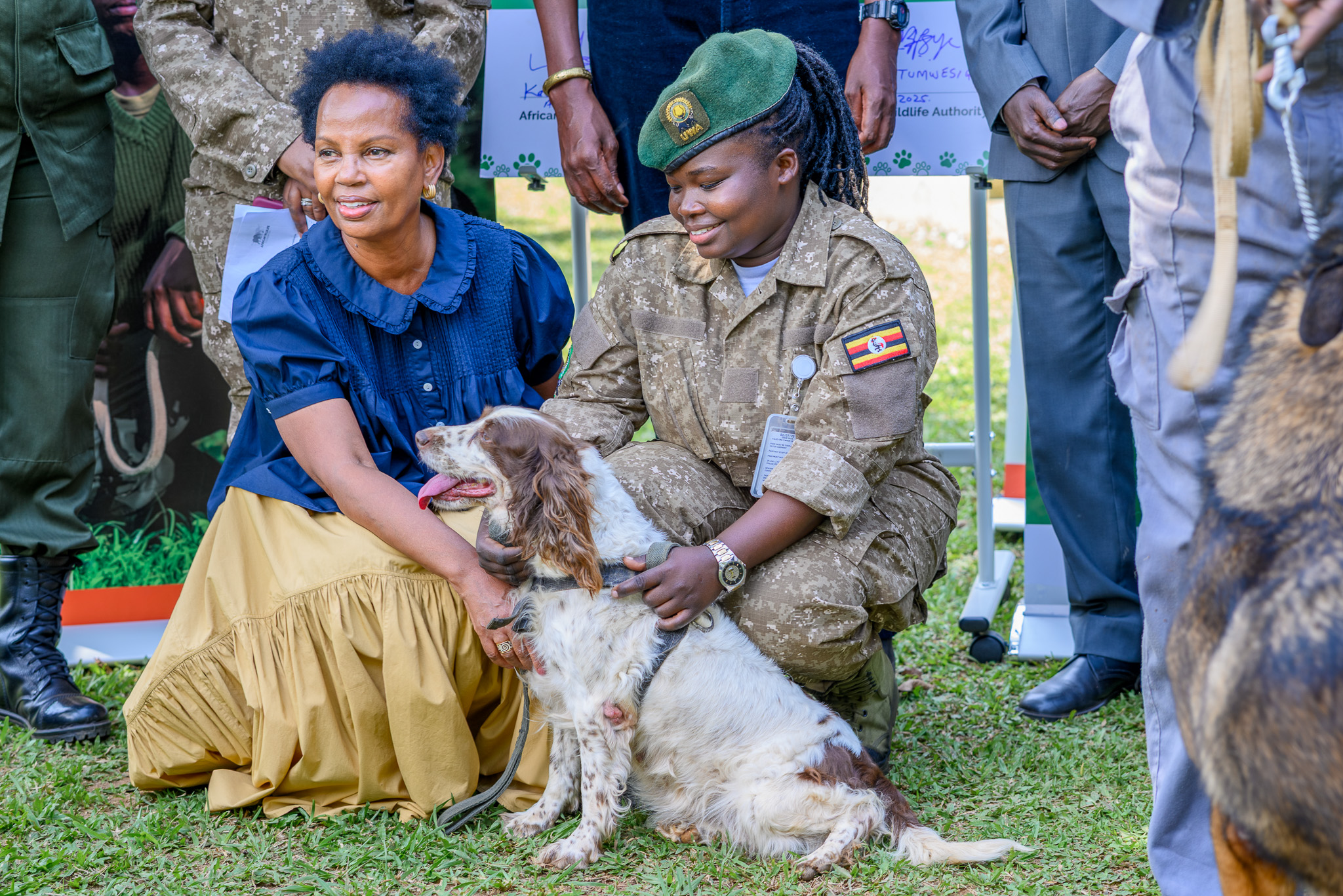
Rose Ssebatindira, AWF Uganda Country Director, at the Entebbe Canine Unit during the Canines for Conservation program transition ceremony.
During the dry season in Uganda’s northeastern districts, water is not just a resource; it is a boundary line between coexistence and conflict. When wildlife ranges beyond protected areas in search of water, farms and grazing lands are often where animals and people meet first.
That reality shaped AWF’s work in 2025—progress would be measured not only by what was protected inside parks, but by how safely and predictably communities and wildlife could share the surrounding landscape.
Across the Kidepo and Murchison Falls landscapes, AWF worked alongside the Uganda Wildlife Authority (UWA), Community Wildlife Associations, local leaders, and civil society partners to deliver a set of practical interventions touching on water infrastructure, conflict response systems, regenerative farming, rights-based safeguards, and strengthened enforcement capacity.
These are the building blocks of durability—they reduce pressure on wildlife, protect livelihoods, and create conditions for scaling what works in 2026.
Water Security in Kidepo: Keeping Wildlife on the Right Side of the Fence
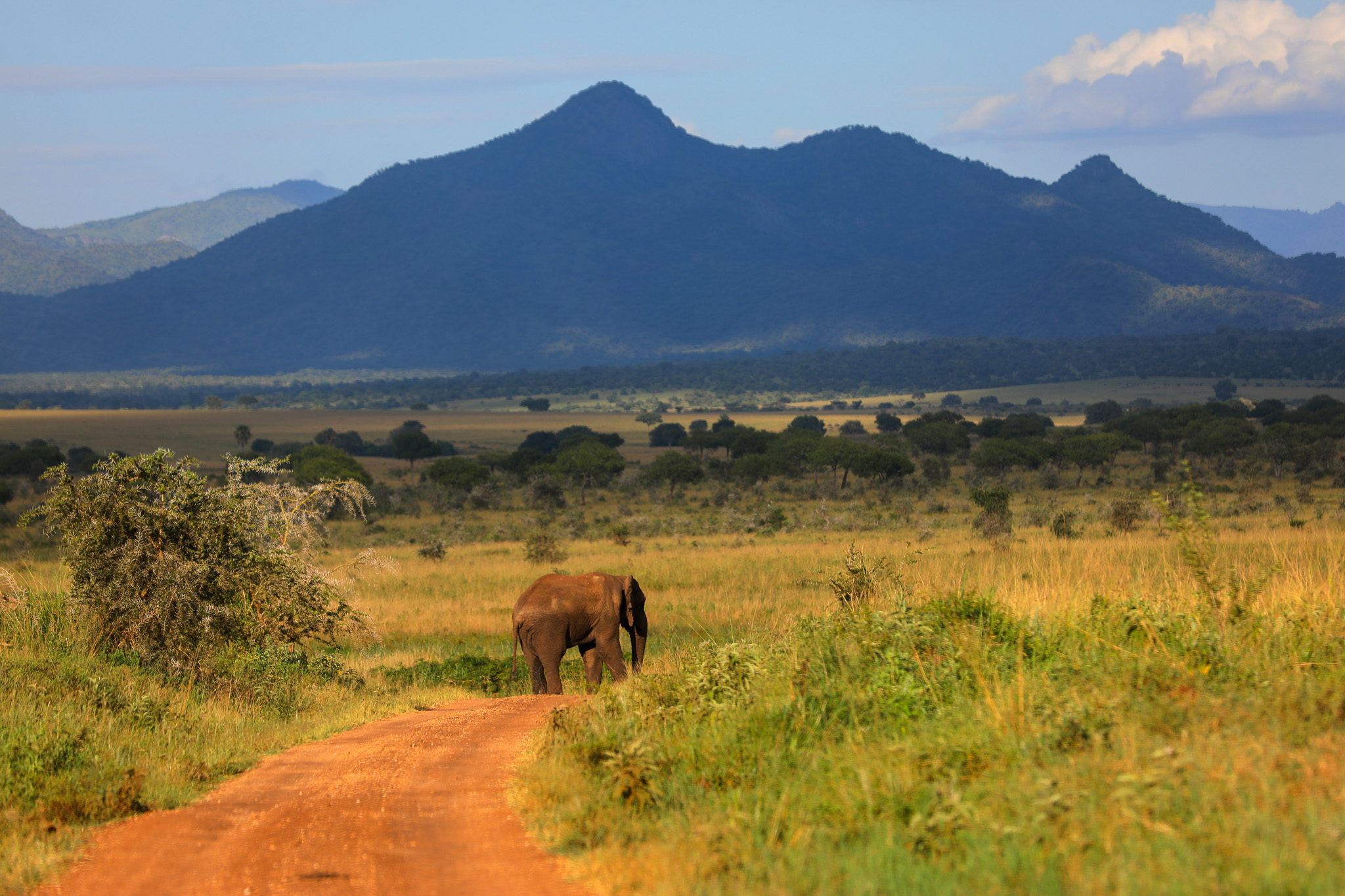
An elephant roaming freely in Kidepo Valley National Park, Uganda.
In Kidepo Valley National Park, AWF supported the desilting of the Lochorkinae earth dam, increasing water retention capacity to an estimated 10,000 cubic meters.
That capacity matters most when pans and seasonal rivers dry up: Reliable water inside the park reduces the need for wildlife to move into surrounding community farmlands, helping prevent crop damage and lowering the temperature of human-wildlife tensions before they escalate.
In 2026, we will build on this approach by completing the rehabilitation of eight boreholes to increase access to clean water for local communities—an investment that strengthens resilience, reduces competition over scarce resources, and helps sustain coexistence measures beyond the park boundary.
Community Governance and Conflict Response: When Local Institutions Work, Conflict Drops
Infrastructure only solves part of the problem. Coexistence also depends on the strength of local institutions and the credibility of response systems when conflict occurs. In 2025, AWF strengthened Community Wildlife Associations through leadership elections and induction, reaching 96 participants, including 81 local leaders and civil society representatives across Lokori and Lobalangit sub-counties.
We also trained, refreshed, and fully equipped 80 community wildlife scouts, providing deterrent tools and deploying 90 Roman candles in high-conflict areas. These efforts contributed to reported reductions in crop raiding of up to 75% in targeted sub-counties. This is evidence that when communities have trained responders and workable tools, they can protect livelihoods without defaulting to harmful, retaliatory responses.
Looking ahead, AWF will expand human-wildlife conflict mitigation measures, with a focus on practical, community-owned systems that provide early warning, safe response options, and consistent coordination with UWA and district leadership.
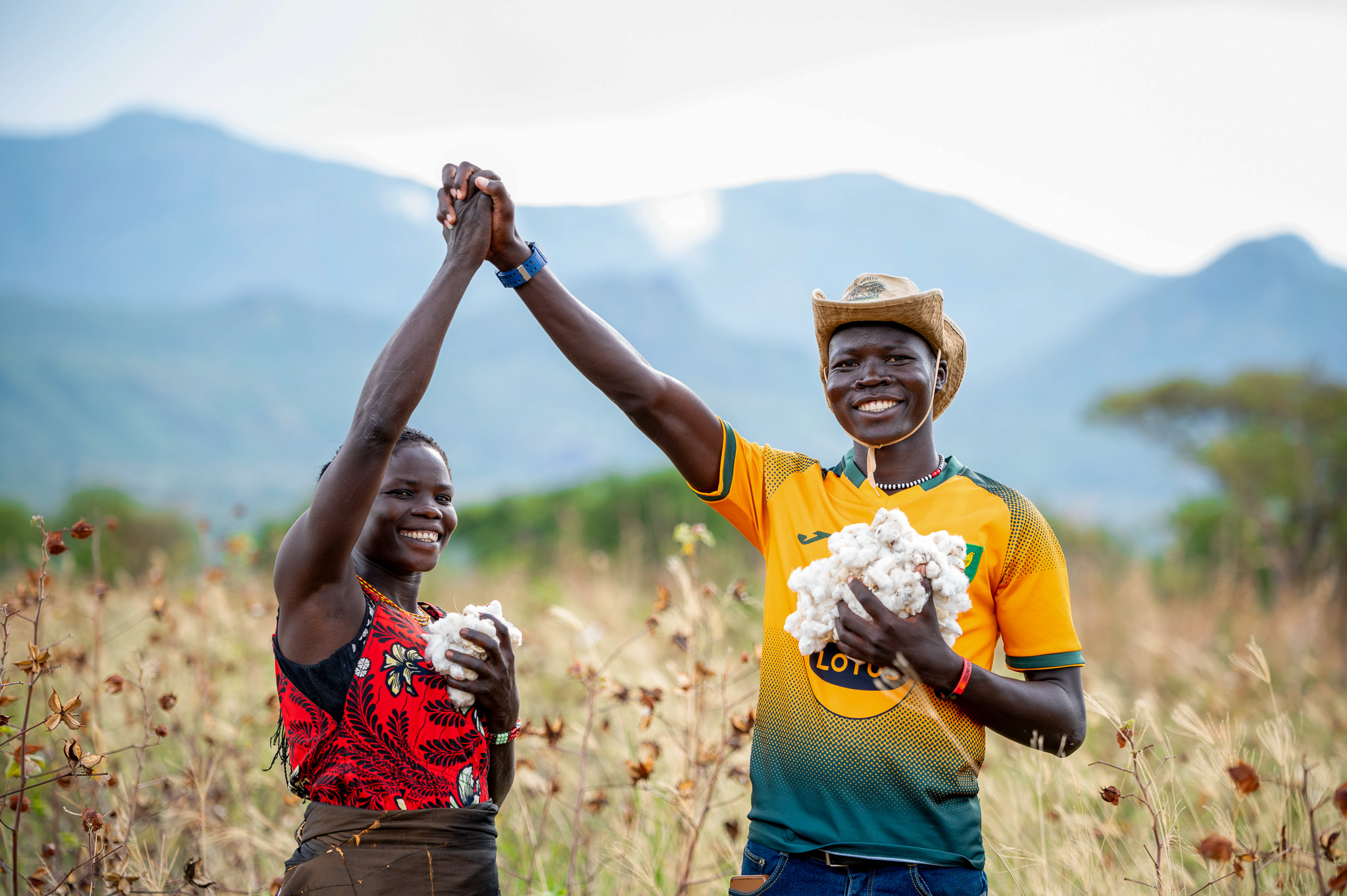
Cotton farmers Victor Bari and Hellen Nakwang celebrating the harvest on their farms.
Regenerative Cotton: Climate-Smart Livelihoods That Support Habitat and Household Stability
Conservation is easier to sustain when households can plan and profit without clearing more land or degrading ecosystems. Through Conservation International’s Regenerative Fund for Nature, AWF advanced a regenerative cotton project by distributing organic cotton seed to 2,280 farmers, resulting in 3,798 acres of cotton farms.
Adoption of regenerative practices, including agroforestry, Farmer Managed Natural Regeneration (FMNR), and soil and water conservation measures, averaged 55%. This is more than a technical statistic; it is a signal that farmers will invest in practices that restore soils and reduce erosion when they can see the value and when the practices fit household economics.
In 2026, we will deepen regenerative cotton programming while strengthening learning loops that track adoption, document outcomes, and improve farmer-to-farmer mentorship so the practices spread for the right reasons: performance and practicality.
Accountability and Safeguards: Strengthening Trust Through a Rights-Based Approach
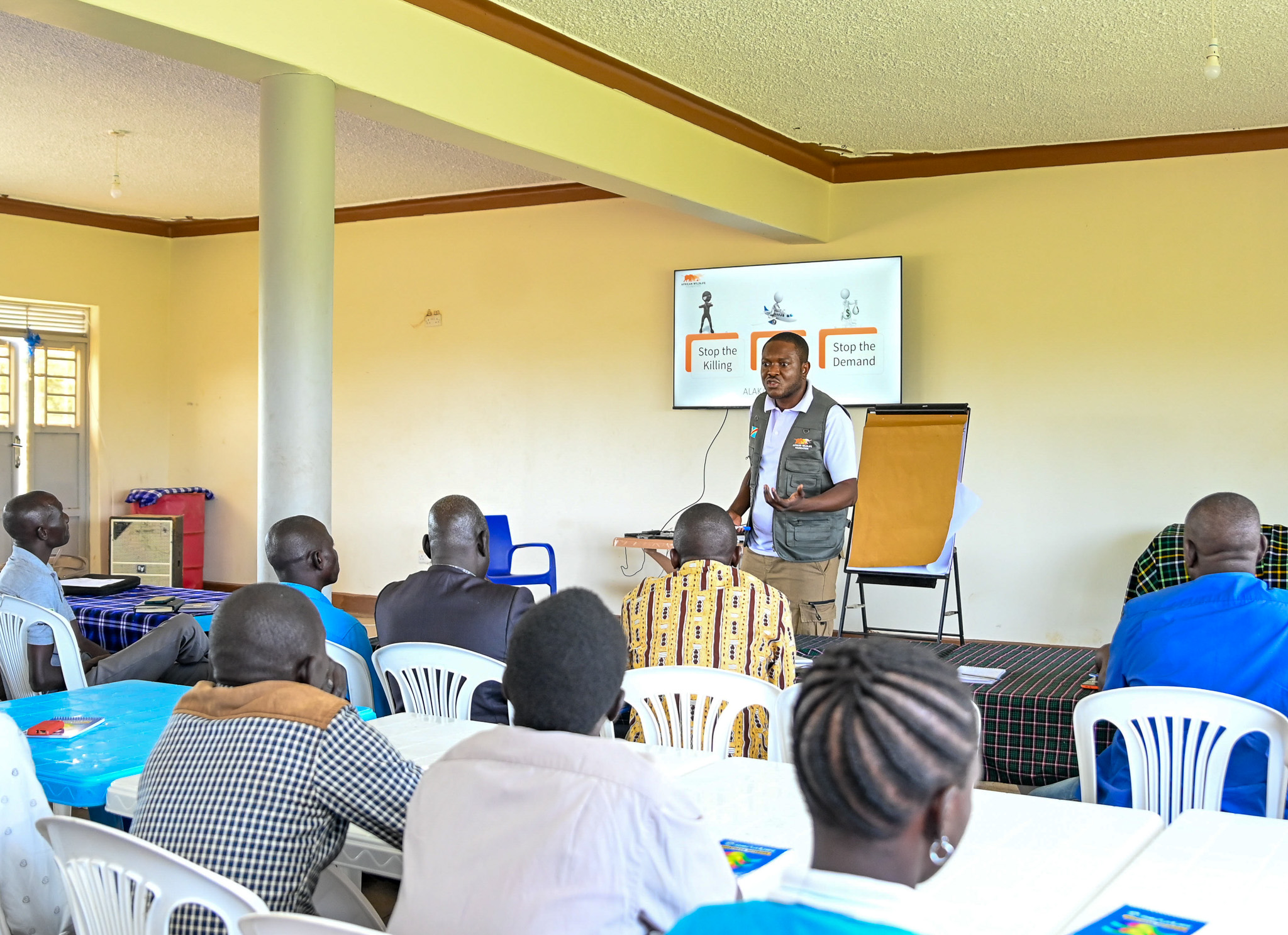
A two-day rights-based approach training for 130 participants in the Kidepo Landscape, covering Karenga and Kitgum districts, under the Regenerative Cotton Farming Project, led by Dodo Moke, Environmental Social Safeguards and Conflict Sensitivity Manager.
Community participation is only durable if it is safe, transparent, and accountable, especially for vulnerable groups who can be excluded from decision-making. In 2025, AWF supported the identification and training of 130 parish grievance and feedback monitors embedded within district, sub-county, and parish structures.
These monitors help manage complaints confidentially, strengthen transparency, and ensure conservation programming responds to community concerns. As we scale interventions in 2026, these safeguards remain essential—they protect community confidence, improve program integrity, and reduce the risk that conservation becomes a source of division rather than shared benefit.
Wildlife Protection Capacity and National Ownership: Preparing for Rhino Recovery
In parallel with community-led measures, AWF invested in strengthening wildlife protection systems in collaboration with UWA. We facilitated training for 24 rangers—12 from Kidepo and 12 from Murchison Falls—in rhino monitoring and management, in preparation for planned rhino translocations: from Ziwa Rhino Sanctuary to Ajai, and from Kenya to Kidepo.
We also supported a significant transition toward national ownership: the successful handover of the AWF-supported canines for conservation program to UWA. This milestone reflects Uganda’s growing capacity to sustain specialized wildlife law enforcement tools while protecting gains achieved through partnership support.
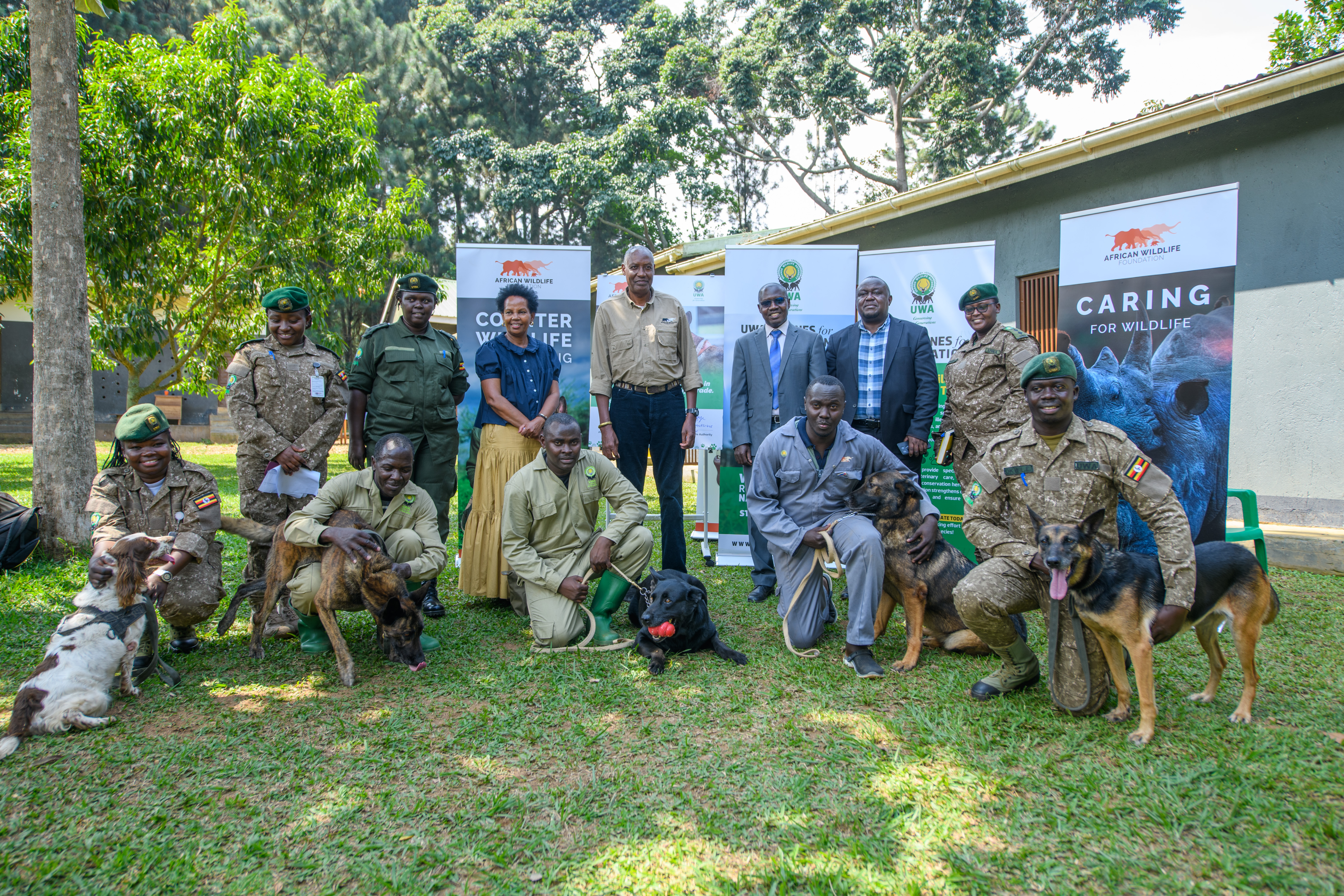
AWF transitions the Canines for Conservation program to the Uganda Wildlife Authority after nine years of collaboration and success.
Tourism and Wildlife-Friendly Enterprises: Laying the Groundwork for Durable Financing
In 2025, AWF initiated eco-tourism learning exchanges involving UWA, Community Wildlife Associations, and AWF staff. These exchanges produced an eco-tourism action plan with priority enterprises identified for implementation in 2026.
This work matters because financing is not an add-on—it is the backbone of durability. In 2026, AWF will strengthen wildlife-friendly enterprises and eco-tourism value chains that reward stewardship, widen benefit-sharing, and reduce incentives for environmentally harmful coping strategies.
Policy and Evidence: Decentralized Conservation that Delivers
Uganda’s conservation practice continued to evolve toward stronger community participation, accountability, and decentralized governance in 2025. AWF’s support for operationalizing Community Wildlife Associations and embedding grievance mechanisms strengthened the institutional environment for people-centered conservation.
In parallel, improved conservation data management and landscape planning including mapping and monitoring regenerative cotton farms and tracking adoption of climate-smart practices supported better coordination between communities and authorities. The objective remains straightforward: Ensure decisions are grounded in evidence and shaped by the realities of implementation on the ground.
Looking Ahead: What it Will Take to Sustain Progress in 2026
The achievements of 2025 should be treated as starting points, not endpoints. Uganda’s landscapes continue to face persistent pressures, from climate variability to land use change, and the cost of inaction is borne first by communities living closest to wildlife.
AWF Uganda calls on partners and stakeholders to strengthen long-term collaboration, flexible financing, and coordinated action to scale community-led solutions that deliver shared benefits. In 2026, our focus is clear: Consolidate what worked, finance what lasts, and back the local leadership that makes coexistence possible so that people and wildlife continue to thrive together.