Cameroon’s Living Landscapes – Where Communities and Nature Shape the Future Together
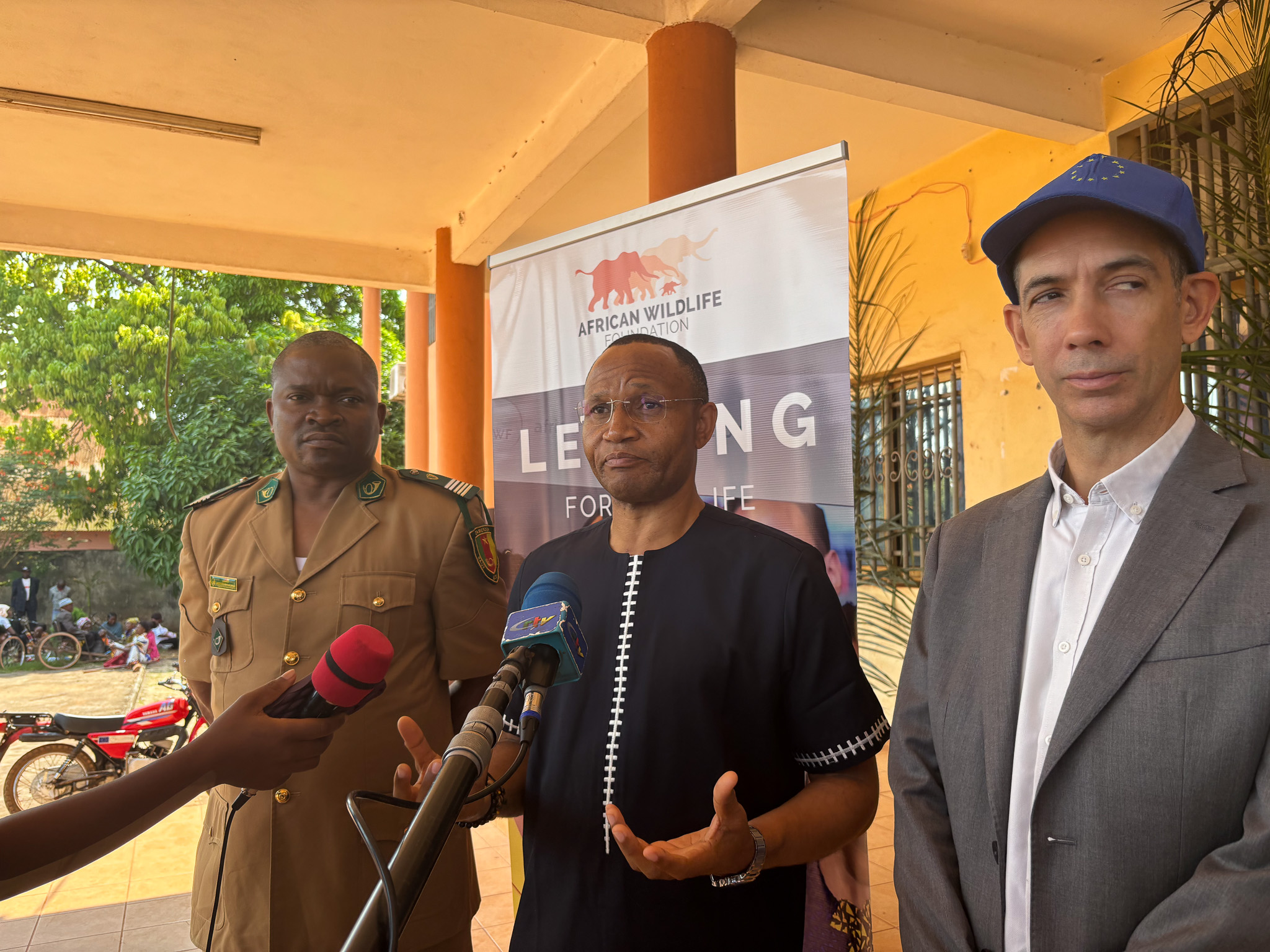
AWF Cameroon Country Director Norbert Sonne (Center) speaking to media during a stakeholder meeting in Abong Mbang, East Cameroon.
Cameroon’s protected areas are more than forests and wildlife. They are living landscapes where communities shape conservation outcomes; young people build careers, and partnerships turn global commitments into real change. In 2025, the African Wildlife Foundation (AWF) and its partners collaborated with the government, donors, and local communities to ensure that these landscapes remain protected and full of opportunities.
A National Commitment to People-Centered Conservation
Across the country, AWF strengthened collaboration with the Ministry of Forestry and Wildlife (MINFOF) to embed community voices in protected area management. Rangers patrolled on foot, motorbike, and river, while camera traps captured the presence of gorillas, chimpanzees, elephants, and panthers.
Since 2023, AWF has facilitated national consultations between MINFOF, financial partners, and conservation organizations to design a new policy framework that ensures Indigenous peoples and local communities are fully represented in protected area governance. Cameroon is moving toward a conservation model where communities are not just consulted but are active managers of their natural heritage.
But conservation is also about people. In 2025, 13 young graduates joined AWF’s internship program, while 7 graduates from previous cohorts transitioned into full-time staff. These milestones show how Cameroon is nurturing its own conservation leaders by building a new generation of professionals committed to safeguarding the country’s biodiversity.
Dja Faunal Reserve – A Landscape of Rights and Resilience
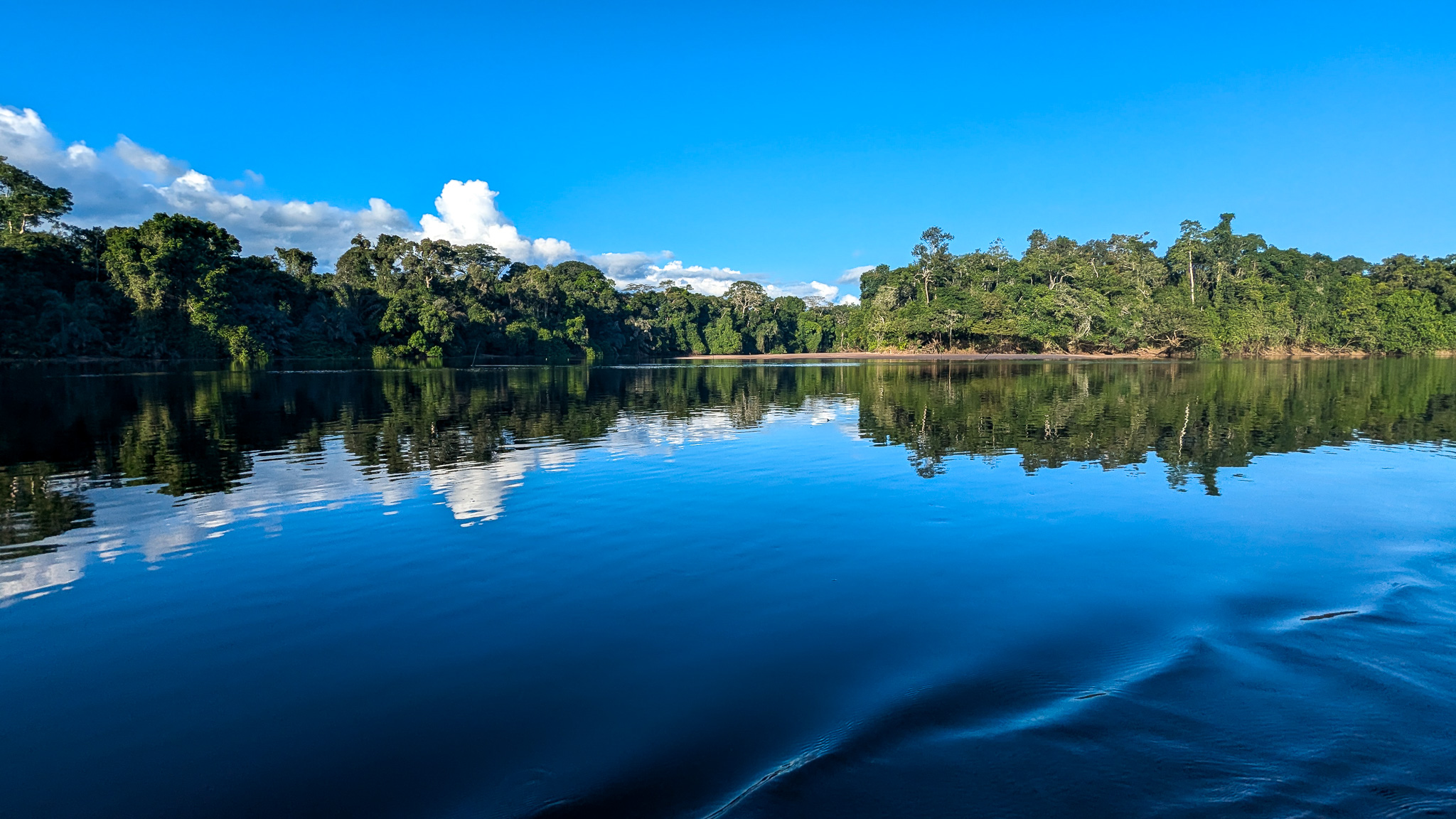
Dja Faunal Reserve.
In the Dja landscape, conservation and livelihoods are advancing together. Communities tend sustainable cocoa farms, youth plant trees, and rangers use digital tools to monitor wildlife more effectively.
In 2025, AWF supported fishponds stocked with 13,500 juvenile fish, trained 1,381 farmers, and reached 350 students and adults through environmental education. Together, they raised 11,000 seedlings and planted 300 trees.
Anti-poaching patrols covered 28,540 km, dismantled 2,662 snares, and rescued 29 live animals. Eco-guards received training in judicial procedures and ecological monitoring and were equipped with drones and camera traps. A rights-based conservation approach ensured that Indigenous peoples and local communities participated in grievance mechanisms and natural resource decision-making.
A young graduate named Jean returned home after his studies to establish a cocoa farm under shade trees using organic techniques. His yields rose by 35 percent in two years, improving household nutrition and inspiring other youth to follow his lead. His story shows how conservation can open doors for rural youth. These achievements were supported by the European Union and UNESCO.
Faro National Park – Where Dialogue and Land Use Build Peace
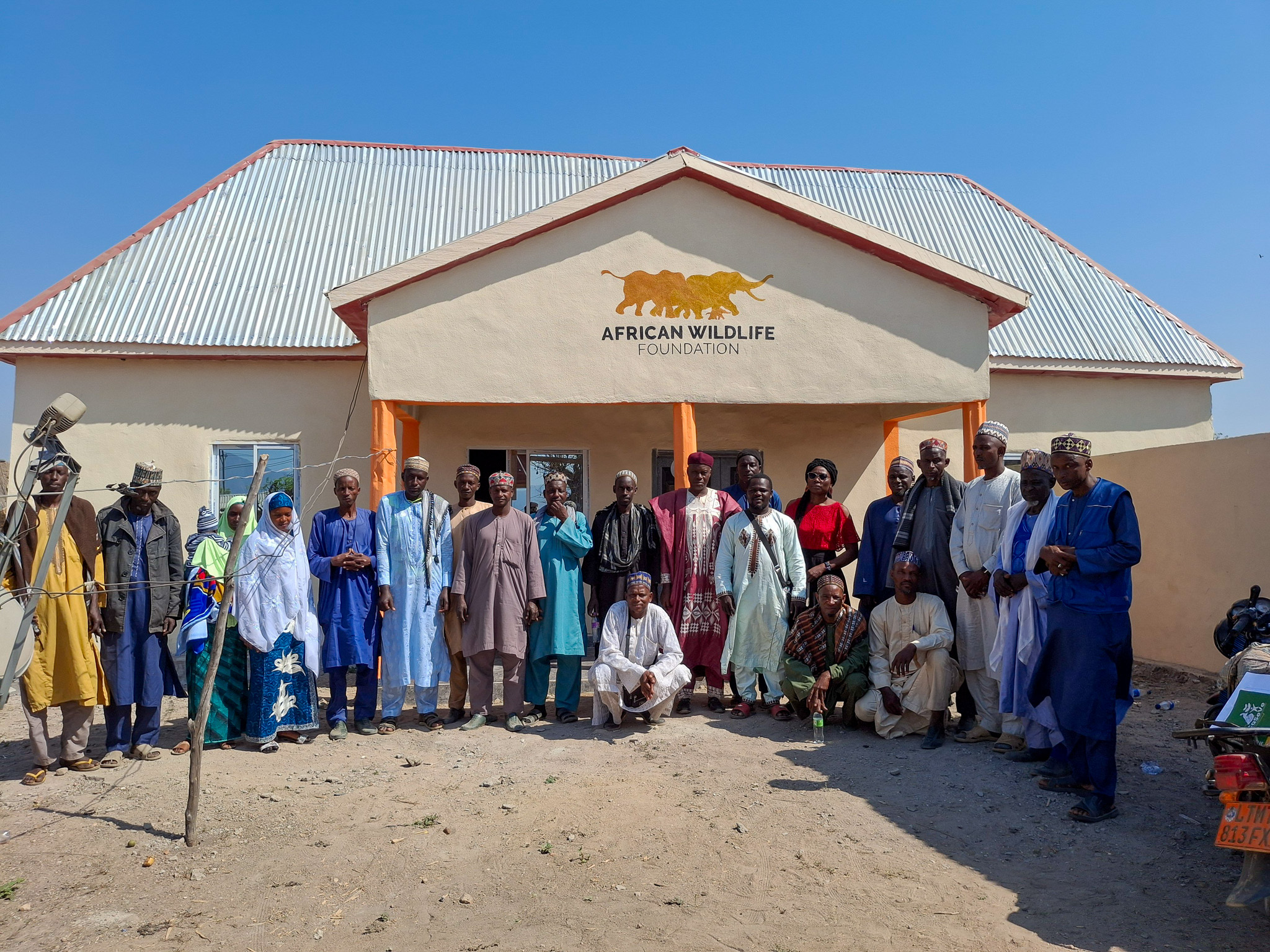
Community leaders and partners come together under the AWF–TANGO Concept.
In Faro, where pastoralism, farming, and wildlife meet, conservation depends on dialogue. AWF’s TANGO (Association for Peaceful Management of Transhumance) initiative, which is led by Indigenous people and local communities, has brought residents and seasonal livestock herders together, reducing conflict and strengthening trust. Mbororo women received crop processing equipment, improving food security for dozens of households, while clean water points were installed at schools and community centers.
Oumma Djaoudji, a mother and treasurer of TANGO, explained how the community is adapting to these changes, thanks to the trainings conducted by the TANGO team.
“Pastoralists are beginning to understand the need to conserve their lands. Pastoralists are now following specific routes to feed their cattle, and the number of complaints about conflicts between pastoralists and the government has drastically reduced, explained Oumma.
Strategic tools such as the Faro National Park Development and Business Plan and the Eland Derby Faro Landscape Plan guide land use decisions and shape the park’s future. Patrols and ecological monitoring continue to protect wildlife, while community forums ensure that local voices remain central.
These efforts were supported by the European Union, Hans Wilsdorf Foundation, and Simply Southern, ensuring that Faro’s people benefit alongside its wildlife.
Campo Ma’an National Park – Where Conservation Meets Cocoa
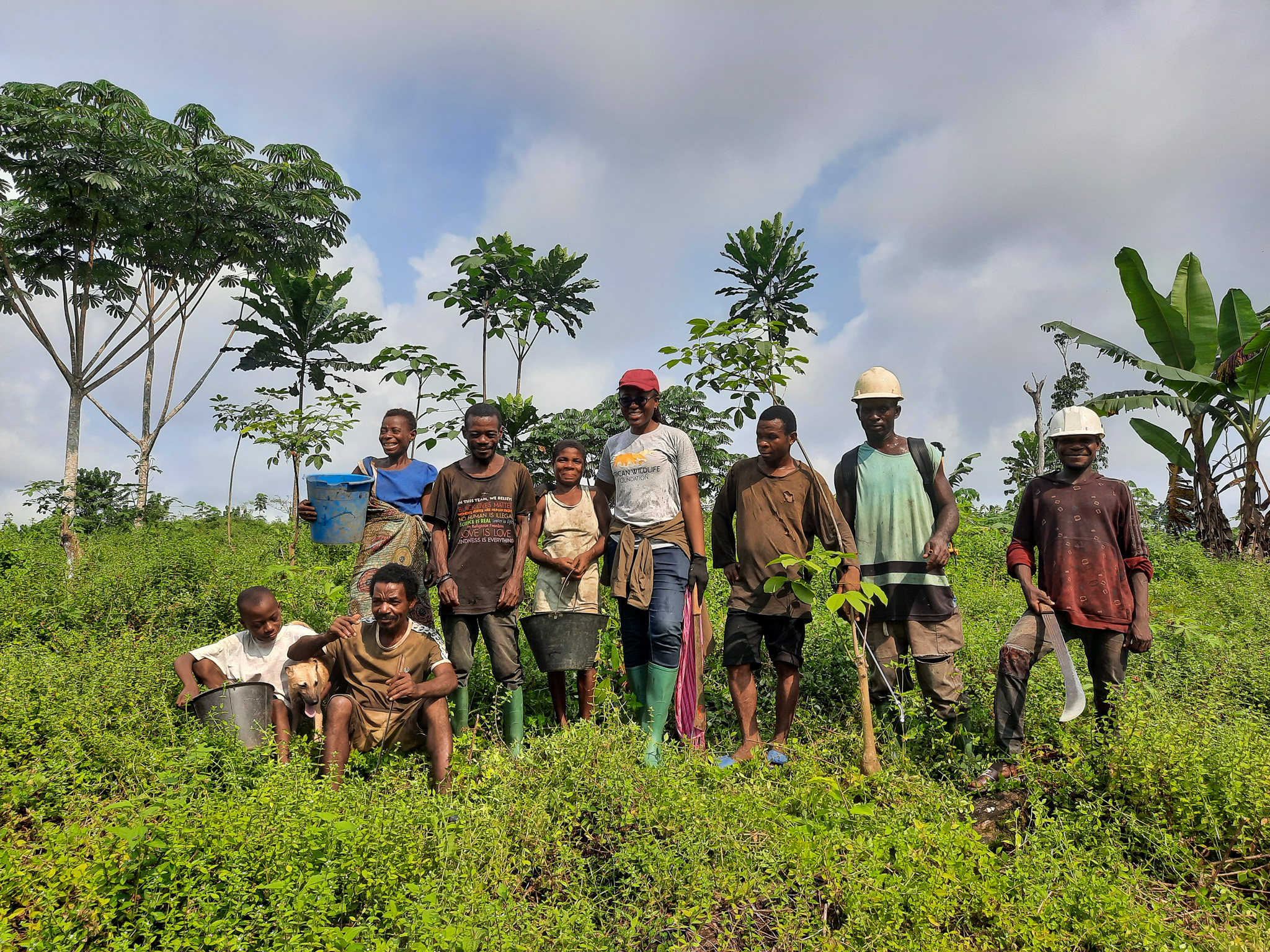
Group picture of cocoa farmers in Campo Ma'an.
Campo Ma’an is a landscape where farming and conservation grow side by side. Farmers planted 84,200 cocoa seedlings and plantain suckers, established 69 hectares of cocoa plantations, and expanded 9.1 hectares of rubber plantations now entering production. AWF’s training strengthened farmers’ ability to monitor and manage their crops, directly linking livelihoods to conservation.
Anti-poaching teams covered 2,438 km, dismantled 667 snares, seized 6 firearms and 102 rounds of ammunition, and rescued 3 endangered mammals. In a landmark step, 10 gorilla guardians from the Bagyeli community were trained alongside rangers, men, women, and children to monitor great apes. This marks the beginning of community-led wildlife monitoring.
AWF also convened companies, port authorities, and communities to address pressures from logging, mining, and agroindustry. This dialogue is expected to lead to coordinated action and a basket fund supporting conservation and poverty alleviation.
A task force is currently working on updating the Campo Ma’an management plan, where tourism will be integrated as a key income source, given the strategic location of the park. Two committees have met; a draft plan is complete, socioeconomic studies are finalized, and biological studies are underway. These efforts were supported by FEDEC, KfW, GEF, and Karen Combs.
A Shared Future
Cameroon’s landscapes are more than parks; they are living spaces where elephants roam, children plant trees, women lead enterprises, and young graduates step into conservation careers. From Dja’s rights-based approach to Faro’s dialogue-driven peace, to Campo Ma’an’s blend of cocoa and conservation, each story shows that protecting biodiversity is inseparable from empowering people.
“As Cameroon moves into 2026, one truth stands out: protecting biodiversity is not only about saving species. It is about building futures where people and nature shape their destiny together,” says Norbert Sonne, AWF’s Cameroon Country Director.