Rwanda’s 2025 Conservation Journey: Centering People, Youth, and Landscapes in a Changing Climate
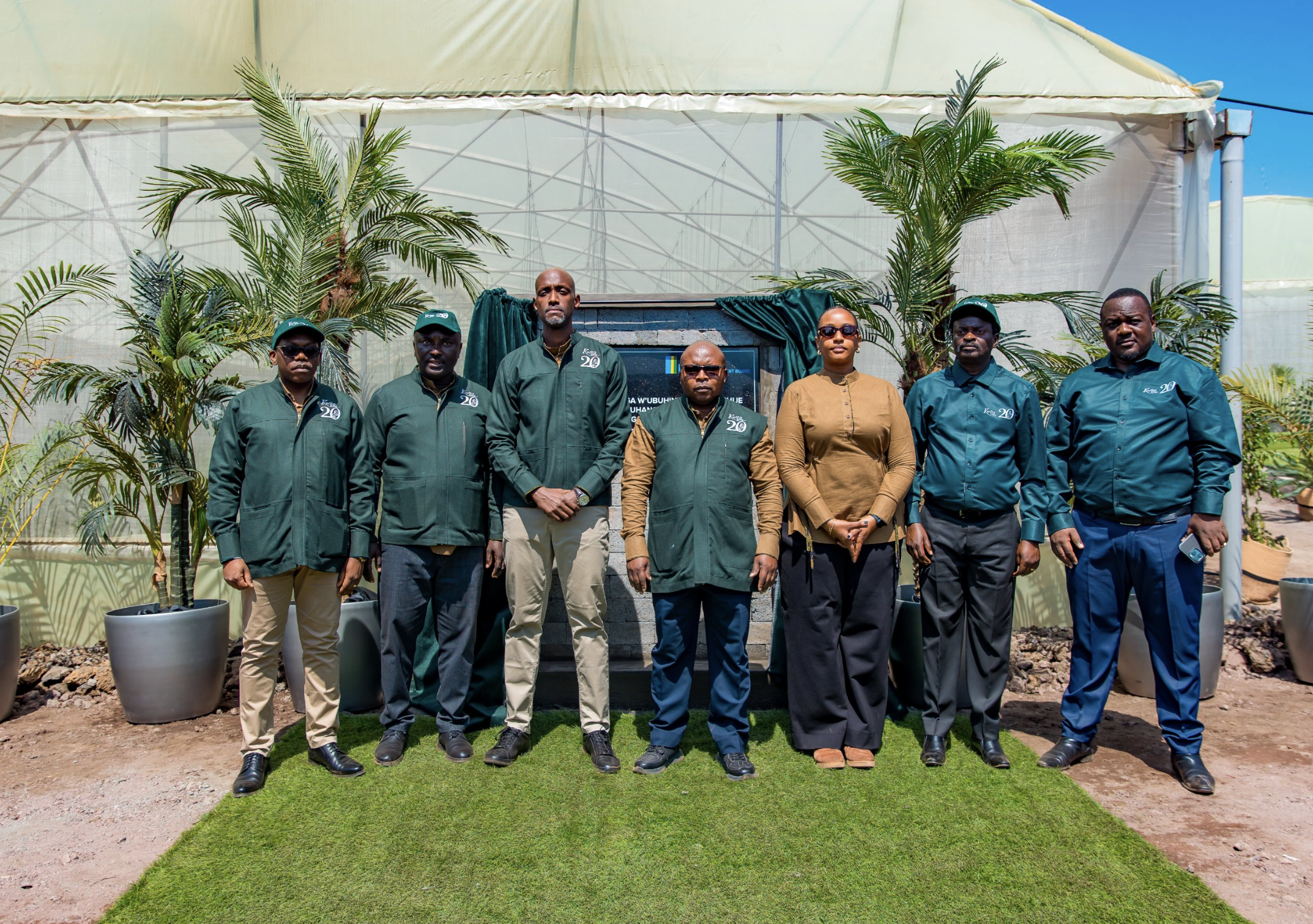
Rwanda Development Board CEO Jean Guy Afrika (third from left), alongside Dr. Telesphore Ndabamenye (center), Minister of Agriculture and Animal Resources, and Patrick Nsabimana (far right), AWF Rwanda Country Coordinator, marked the launch of the Kiningi horticulture hub in August 2025.
In Rwanda’s conservation landscapes, the boundaries between people, wildlife, and nature are tightly interlinked. Around Volcanoes National Park (VNP), land pressures, climate variability, and livelihood needs intersect daily with the imperatives of biodiversity protection.
In 2025, AWF Rwanda focused on strengthening those links through people-centered conservation that is practical, locally led, and built to last. Across the year, one lesson remained consistent: Conservation gains endure when landscapes are managed as socio-ecological systems—where livelihoods, restoration, science, and governance reinforce one another.
AWF Rwanda advanced that approach by mobilizing youth leadership, securing critical habitat, strengthening community stewardship, supporting women-led enterprises, and helping shape enabling policy conditions for long-term resilience.
Youth-Led Conservation: Building Resilience Where It Matters Most
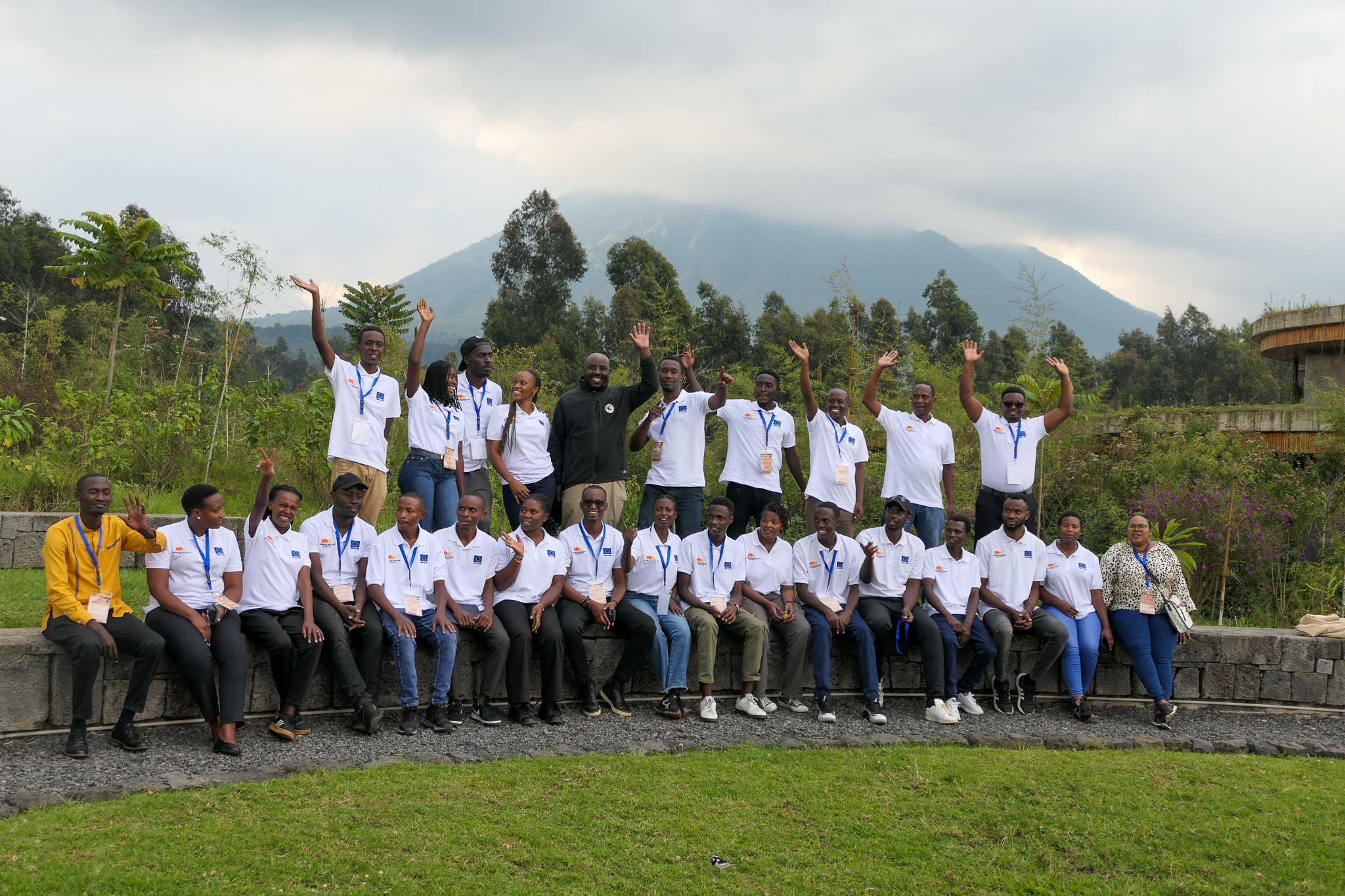
Youth from five organizations receive training on climate-resilient conservation projects in the VNP landscape.
In partnership with the European Union (EU) and SACOLA, AWF launched a youth-led conservation initiative designed to strengthen climate resilience and sustainable livelihoods for communities living around VNP. The initiative is expected to benefit approximately 25,990 people through capacity building, ecosystem restoration, and the adoption of nature-based solutions—including soil conservation, tree planting, and renewable energy technologies.
Placing youth at the center of implementation is not symbolic; it builds local leadership pathways for future environmental governance and ensures conservation is shaped by the people who will inherit its outcomes. In practical terms, this work is creating a stronger foundation for community-led stewardship that can withstand climate variability and evolving livelihood pressures.
Securing Habitat and Strengthening Coexistence Around Volcanoes National Park
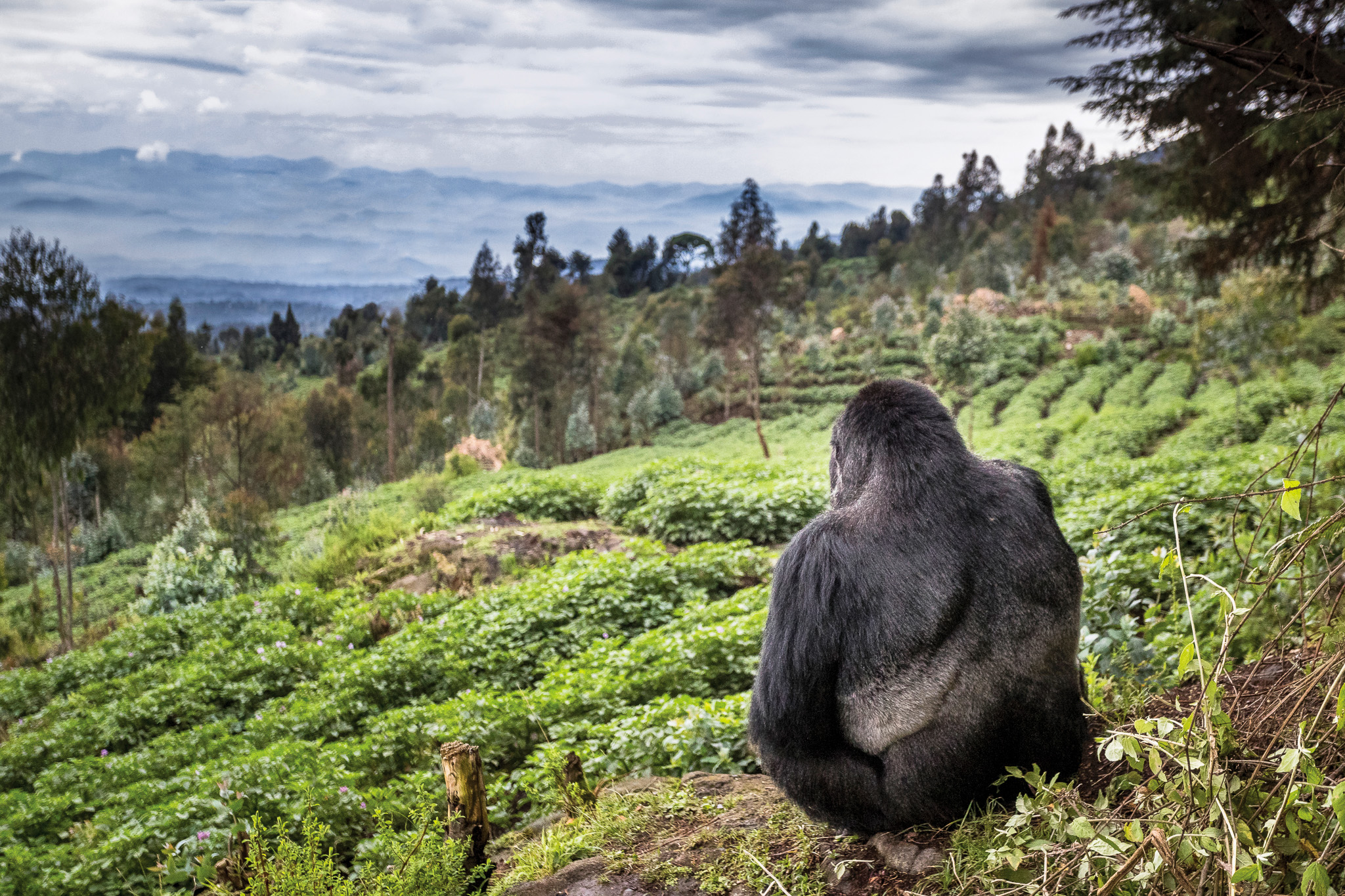
A mountain gorilla pauses at the forest edge in Rwanda.
In 2025, AWF advanced community-centered land acquisition to secure critical habitats and wildlife corridors within the VNP landscape. Approximately 105.25 hectares were acquired and registered to the Government of Rwanda to support long-term conservation governance. This work strengthens ecological buffers and corridors, reduces pressure along sensitive boundaries, and contributes to lowering the risk of human-wildlife conflict by reinforcing the space wildlife needs to thrive.
The effort aligns with Rwanda’s broader conservation direction for VNP, where habitat restoration, diversified livelihoods, and sustainable tourism are treated as mutually reinforcing—not as parallel tracks. Securing land is therefore not only about protection; it is about creating clearer, more durable conditions for coexistence.
Women-Led Enterprises: Livelihoods That Reduce Pressure on Protected areas
AWF strengthened women’s leadership in conservation-linked enterprise development by scaling horticulture value chains and market-oriented livelihoods. Three modern greenhouses covering 2,000 square meters were established, supported by integrated systems that include a climate-controlled nursery for seedlings, washing and sorting facilities, and cold storage units.
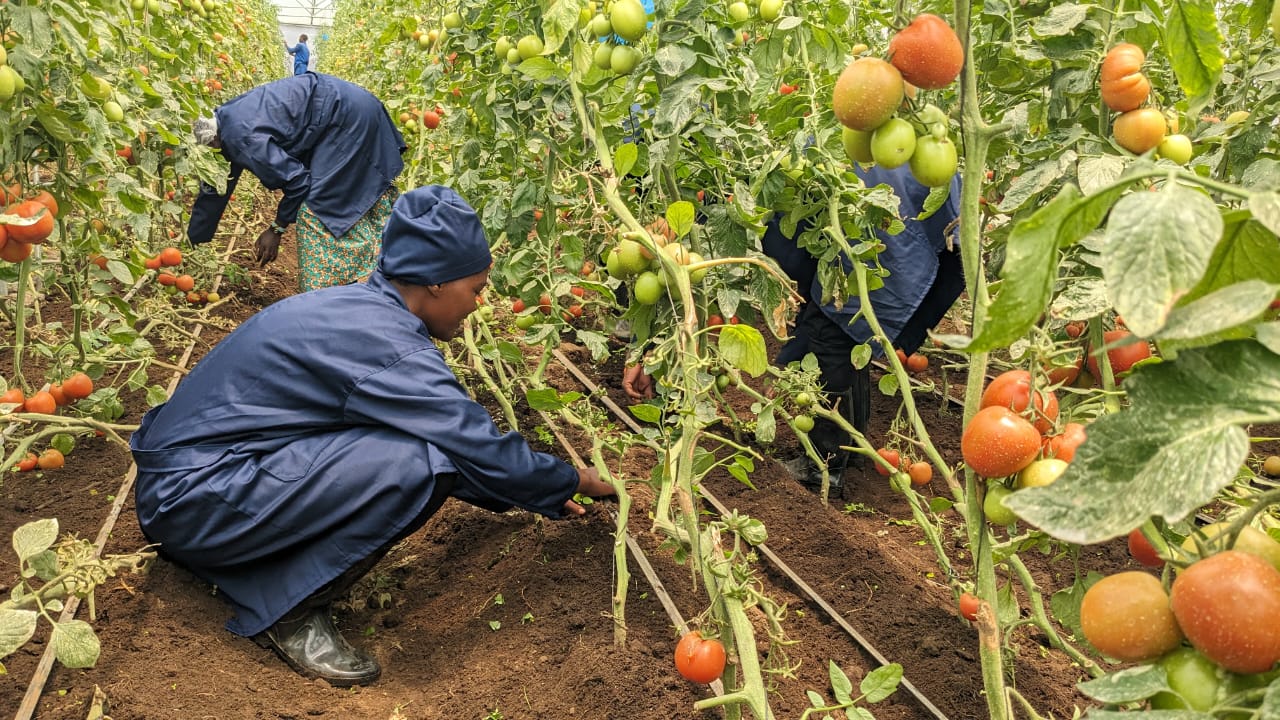
Youth weeding tomatoes as part of hands-on horticulture training.
These enterprises improved incomes and strengthened household food security, while also positioning women as key actors in environmental stewardship. The model demonstrates a clear conservation logic: When livelihoods are reliable and viable, communities are better able to meet household needs without increasing pressure on surrounding ecosystems.
Science and Stewardship: Better Evidence, Stronger Community Protection
Through the TUI Care Foundation program and other partnerships, AWF expanded the scientific foundations needed for evidence-based conservation. Environmental DNA (eDNA) monitoring technologies were introduced to strengthen wildlife data collection and ecological research, supported by a comprehensive experimental design for data collection and analysis across VNP. AWF also produced a baseline biodiversity report to inform a two-season sampling protocol.
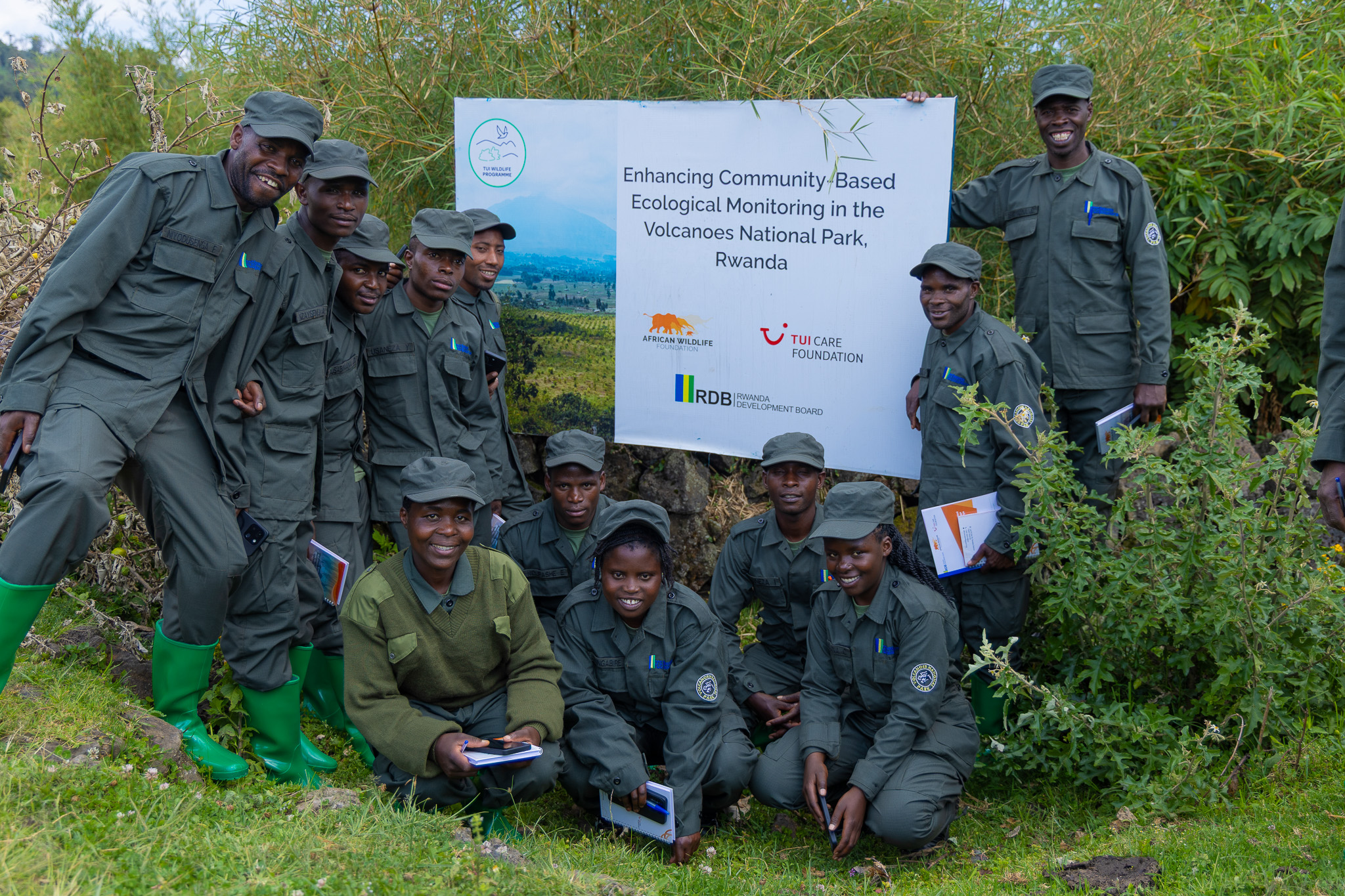
Community Eco-Guards pose for a group photo in the VNP landscape.
AWF convened a partner engagement session with the Dian Fossey Gorilla Fund—expected to host the data center—to review experimental design components and strengthen coordination. Together, these steps improve the quality and consistency of biodiversity data, enabling better-informed decisions over time.
At the same time, AWF strengthened community-based conservation capacity through eco-guards training, engaging individuals from sectors bordering VNP who are committed to environmental protection. Training covered biodiversity protection, animal behavior, human-wildlife conflict, environmental laws, and community-based monitoring—equipping participants to contribute meaningfully to stewardship on the ground.
Schools, Orchards, and Volunteers: Youth Stewardship at Scale
Under the Empowering Youth for Climate-Resilient Conservation and Sustainable Livelihoods in Rwanda project, AWF deepened youth engagement across communities bordering VNP. 10 fruit orchards were established in 10 schools, serving as conservation education hubs while contributing to the Government of Rwanda’s school feeding initiatives.
Beyond schools, 200 youth volunteers mobilized to distribute, plant, and monitor 60,000 fruit trees across 12,000 households—supporting nutrition, climate adaptation, and local stewardship through practical community action. This approach demonstrates how youth engagement can move from awareness to measurable contributions that benefit both people and landscapes.
Policy and Continental Leadership: Aligning Conservation With National Priorities
Rwanda’s conservation policy environment advanced significantly in 2025. In October, the country launched the National Biodiversity Strategy and Action Plan (NBSAP 2025–2030), a comprehensive roadmap for integrating biodiversity conservation into national development planning which is aligned with the Kunming–Montreal Global Biodiversity Framework, Vision 2050, and the National Strategy for Transformation (NST2). AWF actively engaged in review and validation processes.
For AWF, these shifts matter because they strengthen the enabling conditions for people-centered conservation, biodiversity-integrated development, nature-based livelihoods, and the financing mechanisms required for long-term landscape resilience. They also reinforce a core principle of durable conservation practice: Biodiversity protection is not separate from development planning—it is foundational to it.
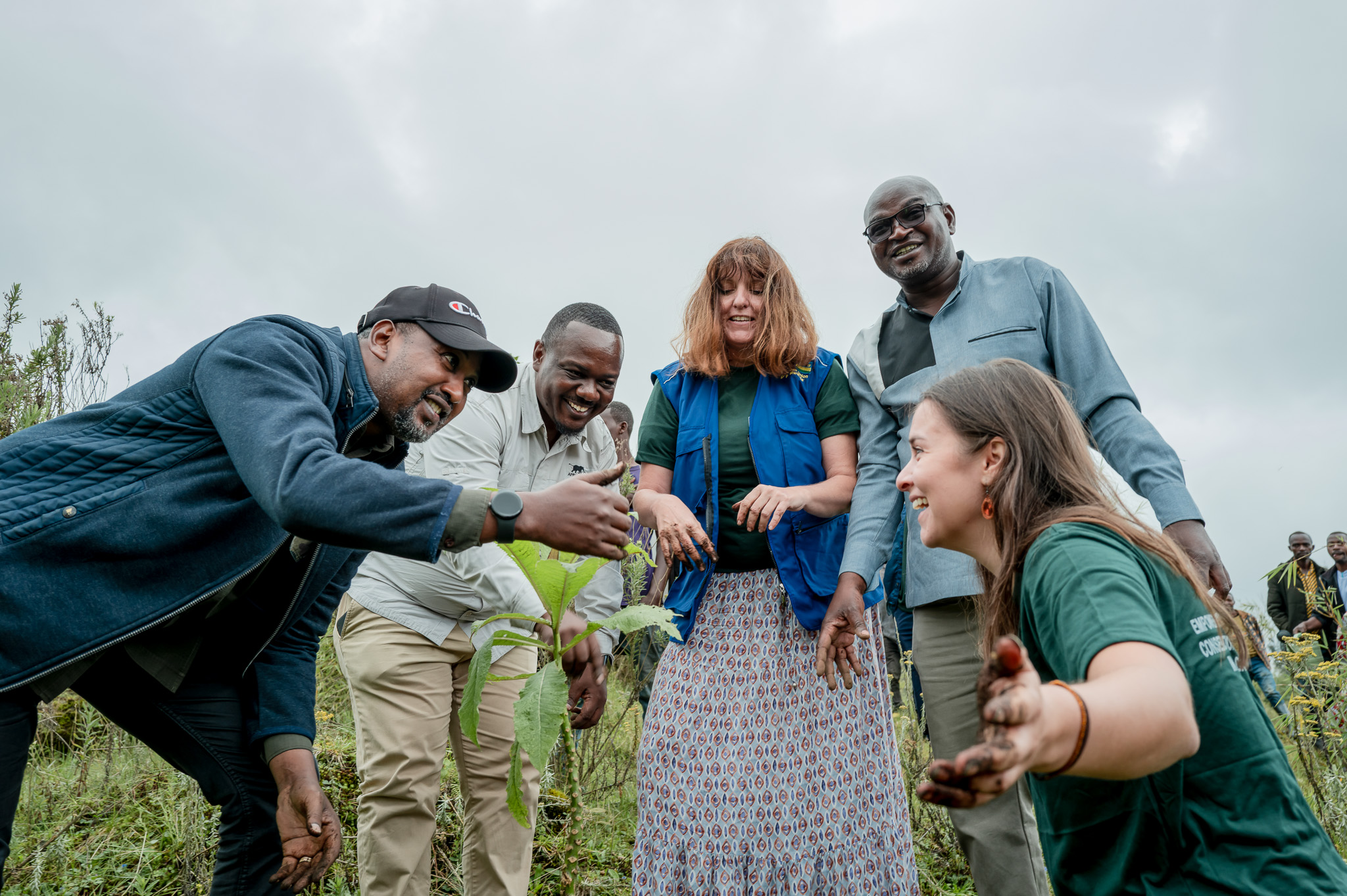
AWF Rwanda Country Coordinator Patrick Nsabimana (second from left) engages with government stakeholders and EU development partners during a tree planting exercise in Kinigi, Rwanda.
Rwanda also advanced long-term direction through the Rwanda Wildlife Conservation Master Plan 2025–2050, designed to halt biodiversity loss by 2030, restore ecosystems by 2040, and secure self-sustaining wildlife populations by 2050. Its emphasis on science, community participation, climate resilience, and sustainable finance closely aligns with AWF’s mission and reinforces the importance of coexistence measures, benefit-sharing, and wildlife-compatible livelihoods.
Beyond national policy, Rwanda’s role in continental and global conservation dialogues continued to grow. AWF Rwanda contributed to Africa-level platforms, including the Africa Youth Biodiversity Forum in Kigali in October 2025, and participated in global knowledge exchange through the World Agroforestry Congress—helping strengthen networks that support African-led biodiversity action.
Looking Ahead to 2026: Scaling Integrated Landscape Solutions
The gains of 2025 are meaningful, but they remain vulnerable to climate change, land-use pressure, and persistent biodiversity loss. Sustaining progress will require coordinated collaboration and long-term investment that backs what works and strengthens local stewardship at scale.
In 2026, AWF Rwanda will prioritize a shift from pilot interventions to systems-level transformation. This includes scaling integrated landscape approaches around VNP that link land acquisition, habitat restoration, livelihoods, and tourism. We also aim to embed conservation objectives within national transformation and decentralized governance frameworks.
Strengthening partnerships with cooperatives, women’s groups, and youth associations to deepen local leadership will also be a key objective in the coming year. This too will lead to expanding engagement with private sector actors, impact investors, and climate finance institutions supporting nature-based solutions and green value chains.
The direction is clear: Consolidate what worked in 2025, finance what lasts, and keep communities at the center—because conservation that works for people works for nature.