Community Eco-Guards Reimagining Conservation in Rwanda’s Volcanoes Landscape
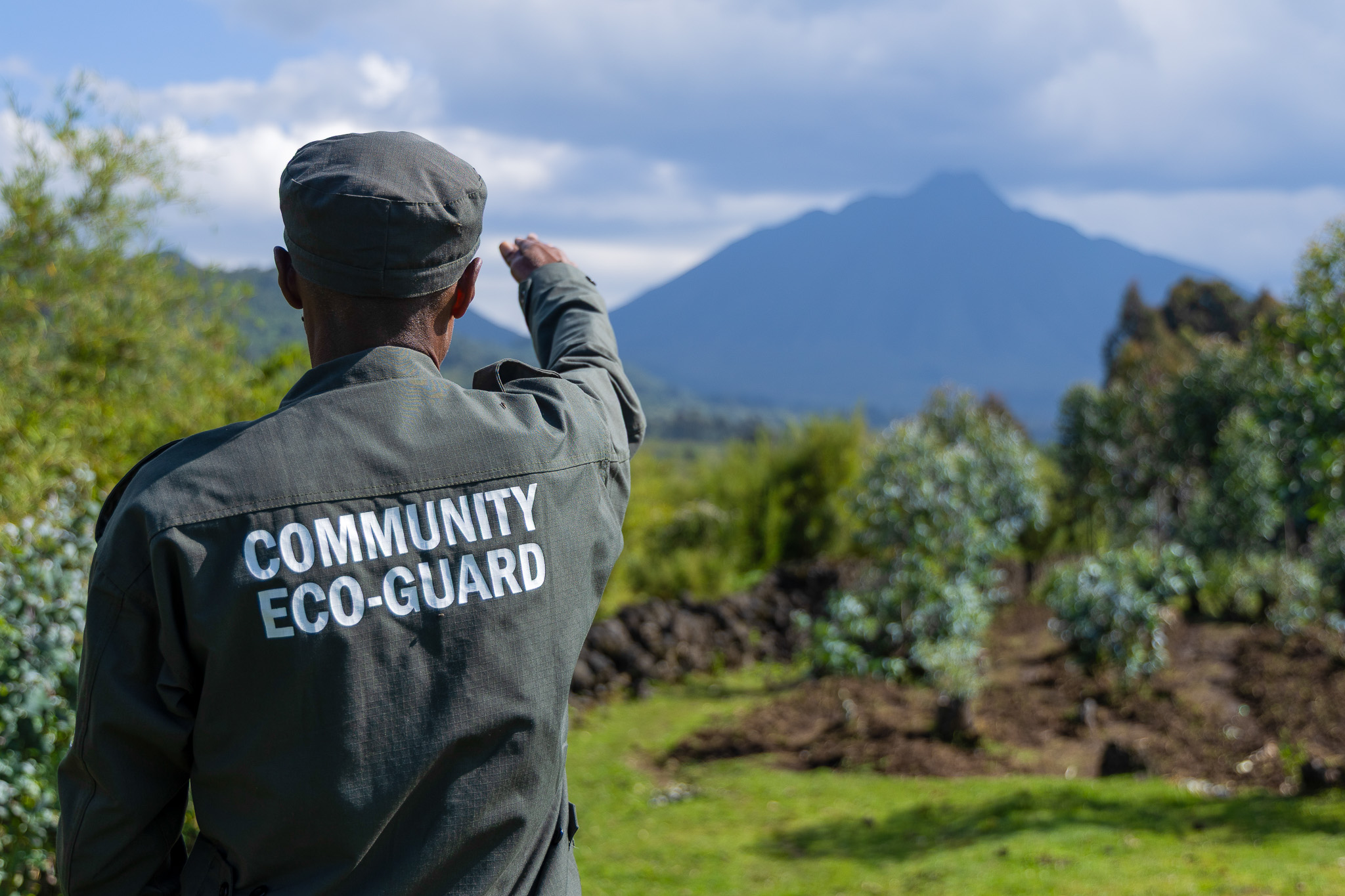
A Community Eco-Guard surveys the Volcanoes Landscape.
Volcanoes National Park is at the center of a shift in Rwanda’s conservation story. A shift shaped not only by institutions, but by communities stepping forward to become stewards of biodiversity.
For Nyirabureteri Beatrice, that change began with a training session and an unexpected realization.
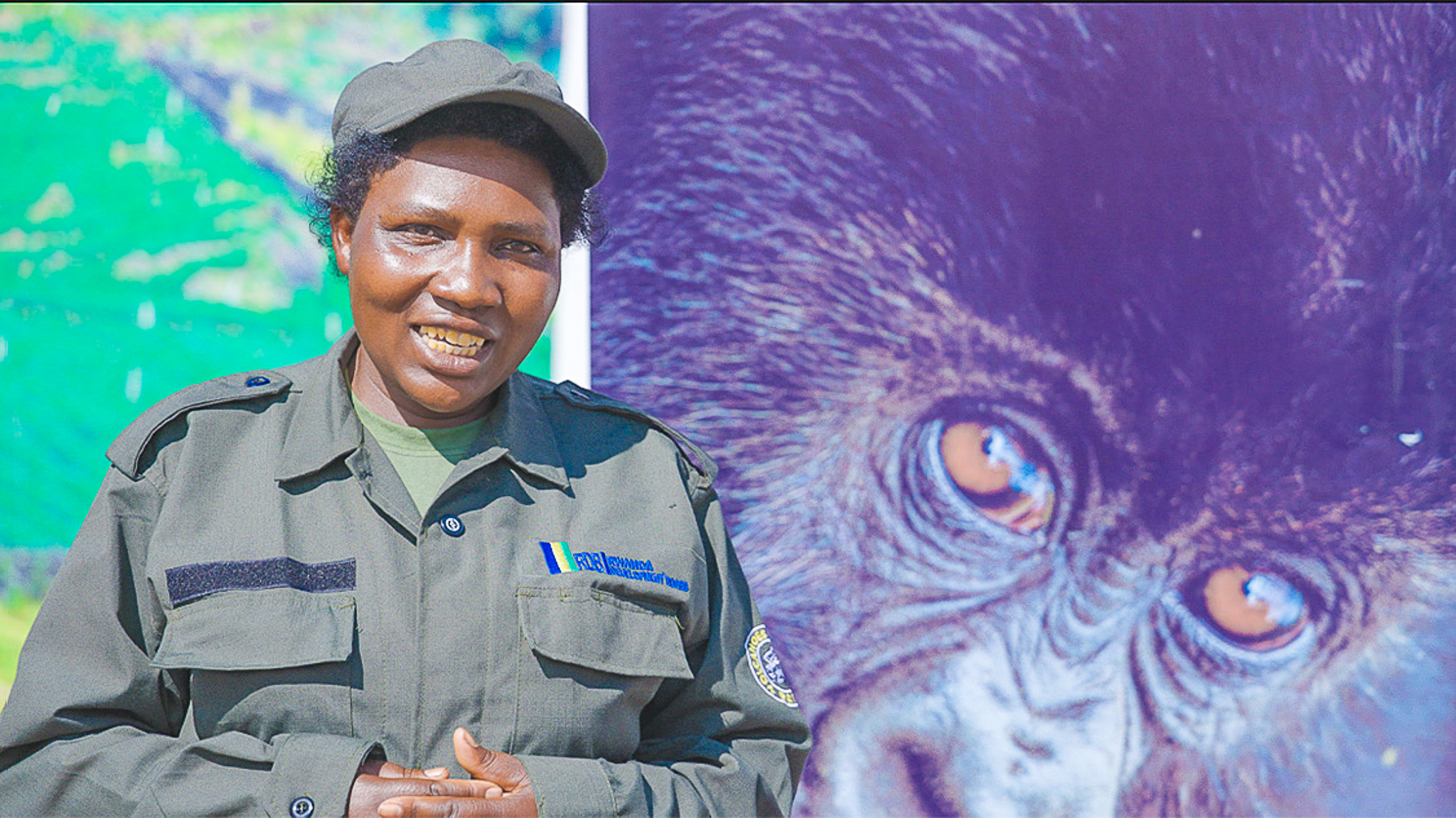
Nyirabureteri Beatrice, a Community Eco-Guard.
“When I first heard about conservation, I thought it had nothing to do with me,” recalled Beatrice, one of the newly trained community eco-guards living near Volcanoes National Park (VNP).
“I believed it was the responsibility of officials and park rangers. But after the training I received, I began to understand its importance, and now I want others to understand it too.”
Her reflection captures a growing sense of shared responsibility—where communities once viewed conservation as something happening to them, and now increasingly see it as something built with them.
This shift is being catalyzed by a two-year initiative supported through the TUI Wildlife Programme by the TUI Care Foundation and implemented by the African Wildlife Foundation (AWF) in partnership with the Rwanda Development Board (RDB). The project seeks to modernize ecological monitoring and wildlife protection through skills development, technology, and community engagement across Rwanda's part of the Virungas landscape.
At its core is a network of 113 trained community monitors—men and women selected from villages bordering Volcanoes National Park—who now serve as a frontline interface between conservation strategy and daily reality. Equipped with skills in wildlife monitoring, human-wildlife conflict documentation, and basic ecological surveys, these monitors serve as “conservation sentinels,” improving the flow of information and strengthening adaptive management decisions for park authorities.
Youth, Women, and New Voices Shaping Stewardship
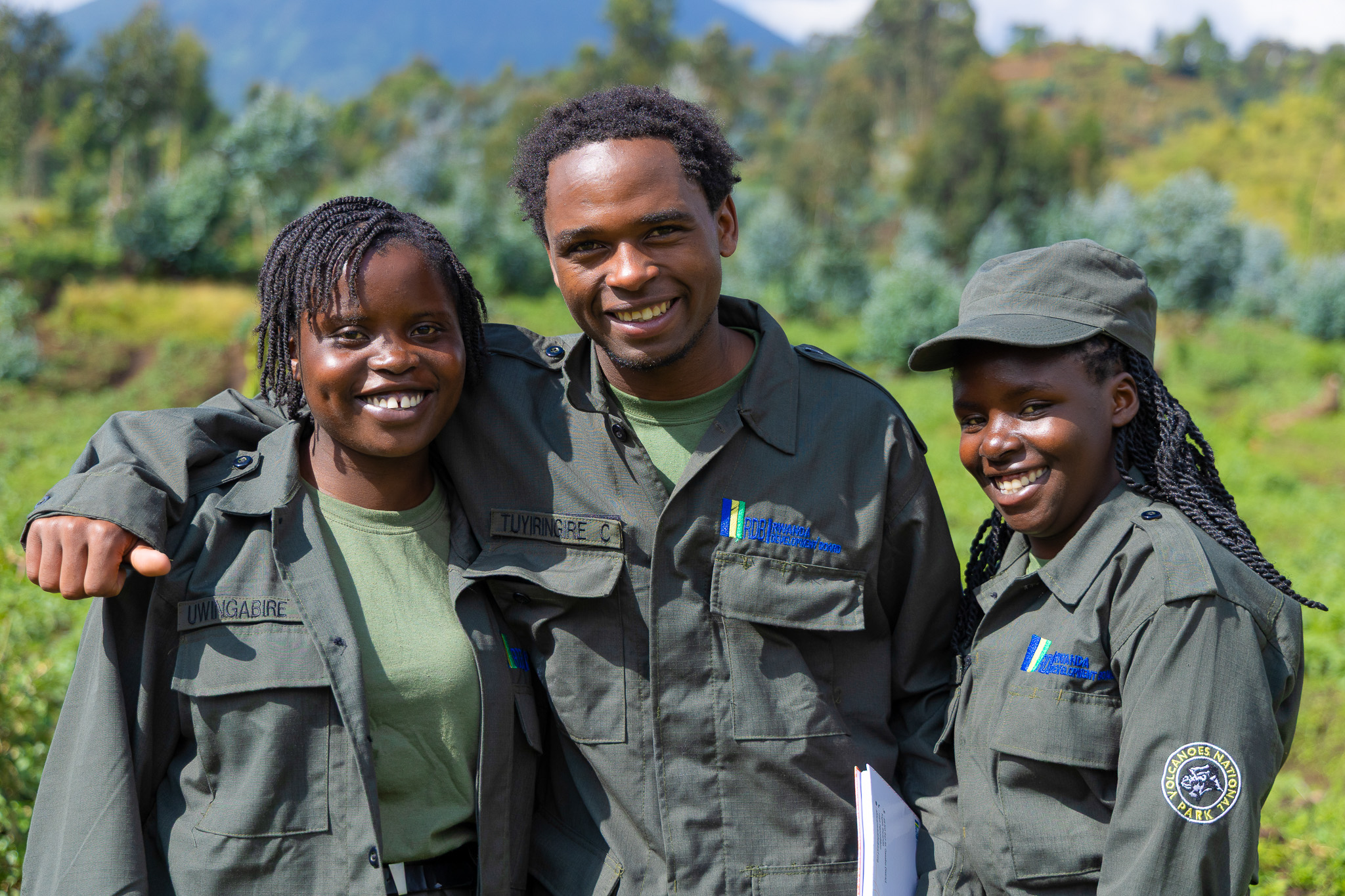
Community Eco-Guards near Rwanda’s Volcanoes National Park representing a new generation of youthful conservation leaders.
For some participants, the initiative has offered inclusion where opportunity had been scarce—especially for young people and women whose contributions to conservation are often overlooked. As a young participant, Monic Niwemubyeyi expressed pride in representing Rwanda’s rising generation.
“As a young person, I am grateful to be chosen for this group because we represent the strength of our country,” she noted. Prior to the training, she assumed that protecting wildlife was solely the responsibility of park rangers.
“After participating in the training offered by AWF and RDB, I gained a deeper understanding of wildlife conservation. Now, I am determined to do my part.”
For Beatrice, the shift has been both philosophical and practical. Conservation activities have provided her with new income and stability. Through fence renovation work and related activities, she earned enough to pay school fees, buy supplies for her children, and secure health insurance.
“All of this has been possible thanks to these activities,” she said, highlighting how environmental stewardship and family welfare need not be at odds.
Olivier Ndagijimana, another participant, emphasized how the training changed his perception of the forest itself—and what it means to protect it in everyday decisions.
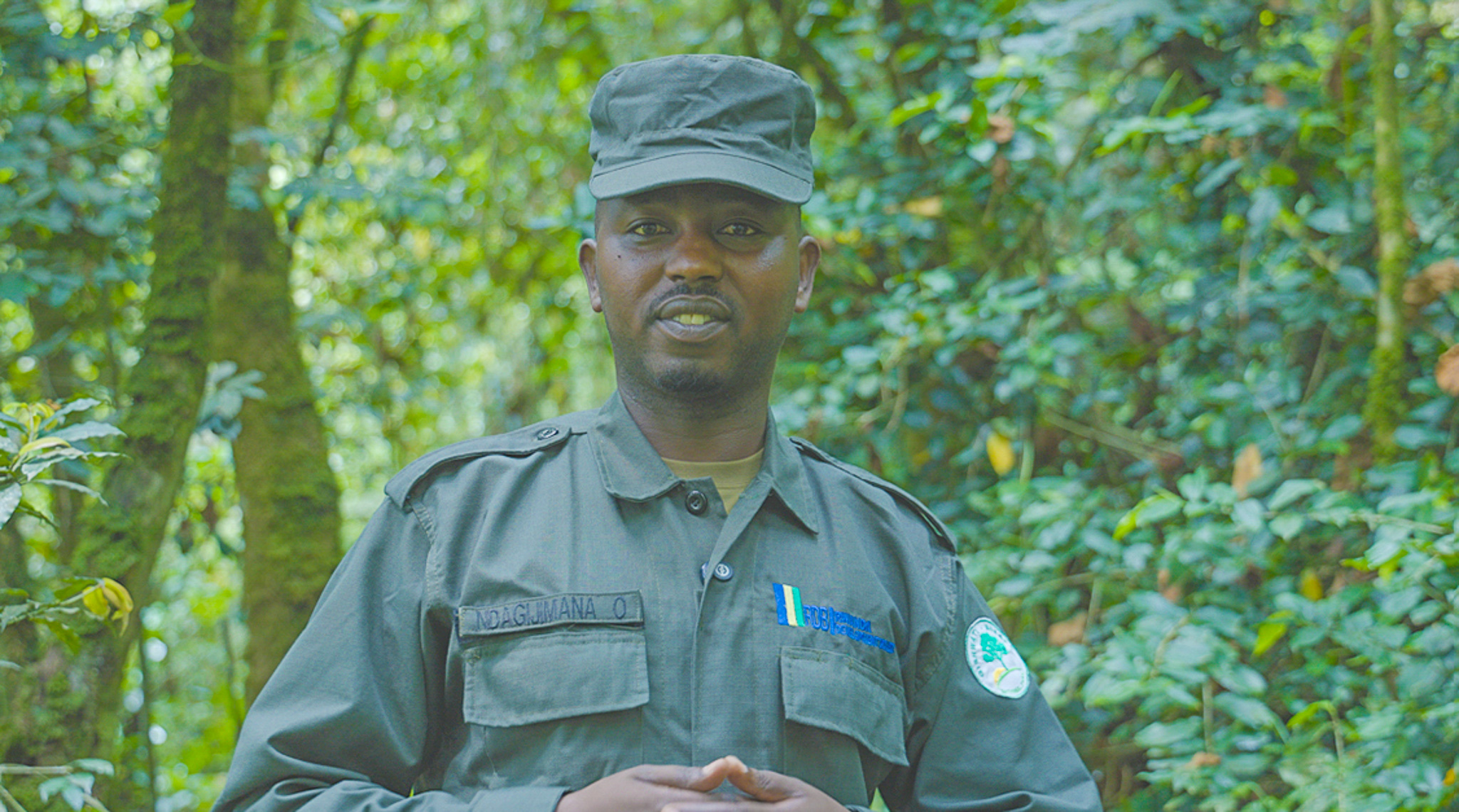
Olivier Ndagijimana, a Community Eco-Guard.
“We collected significant information and plan to assist residents near the park,” he said. He spoke about witnessing tree cutting and other destructive practices that posed risks to forest health. “Every time a tree is cut down, the forest suffers greatly and may not recover,” he noted, underscoring both ecological fragility and community responsibility.
From Conflict Narratives to Coexistence
These voices reflect a broader evolution in how conservation is understood in Rwanda’s protected areas. Historically, residents viewed wildlife protection through the lens of conflict, crop damage, restricted access to land, and safety concerns. But as training deepens, a new narrative is emerging centered on coexistence, tourism value, and shared long-term benefit.
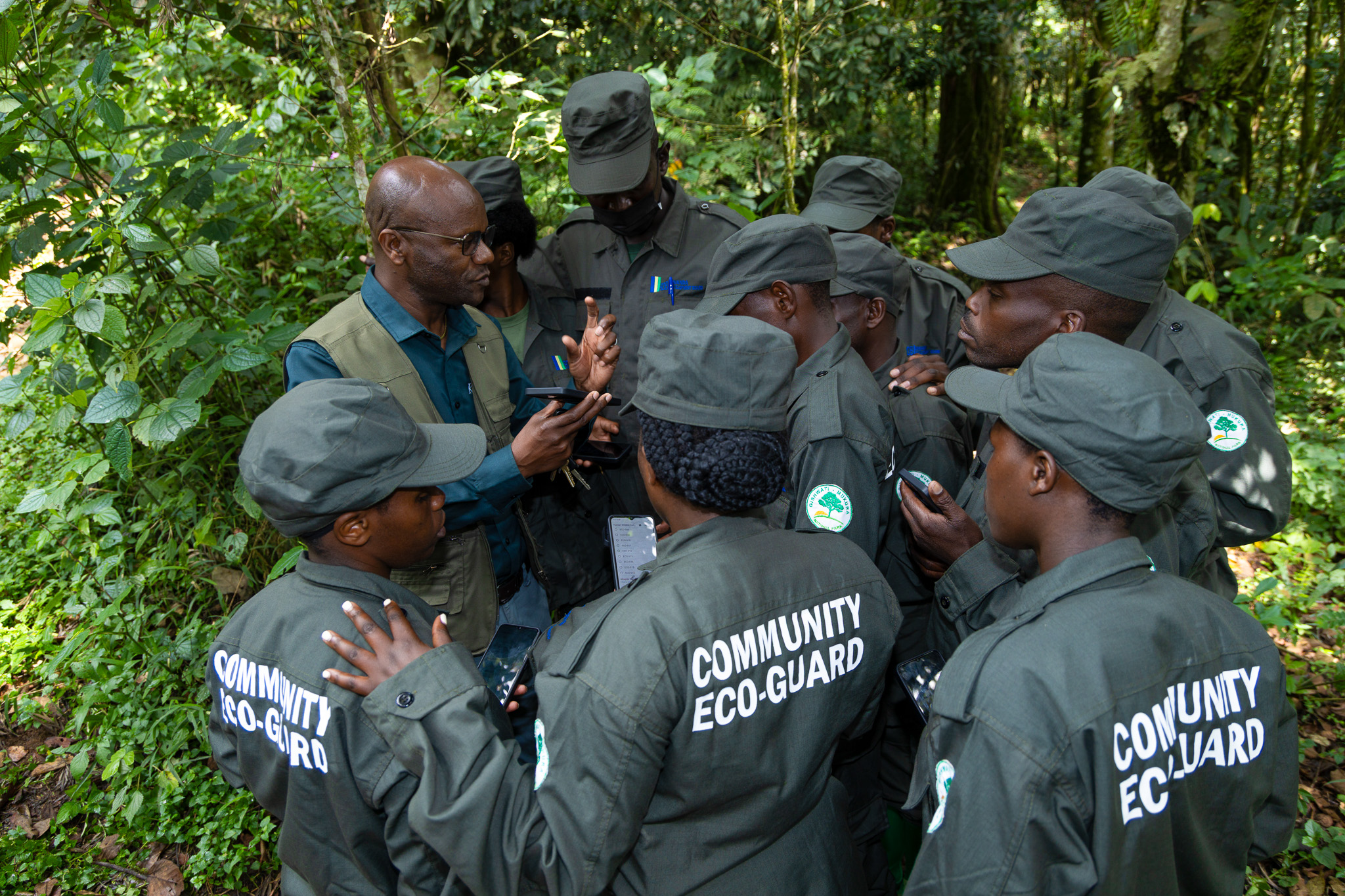
Community Eco-Guards work alongside partners to document wildlife activity, monitor conflict, and strengthen data-driven conservation.
For implementing partners, the long-term goal is to build ownership—ensuring that conservation is not something delivered to communities, but something built with them. With youth involvement, female participation, and skills transfer at its core, the initiative is cultivating a new constituency for conservation, one grounded in agency, participation, and future-looking stewardship.
Beatrice summarized the transformation with quiet confidence: “We can coexist with wildlife without harming each other.”