The Bagyeli Community of Campo Ma’an in Cameroon: Guardians of Health, Heritage, and Livelihoods
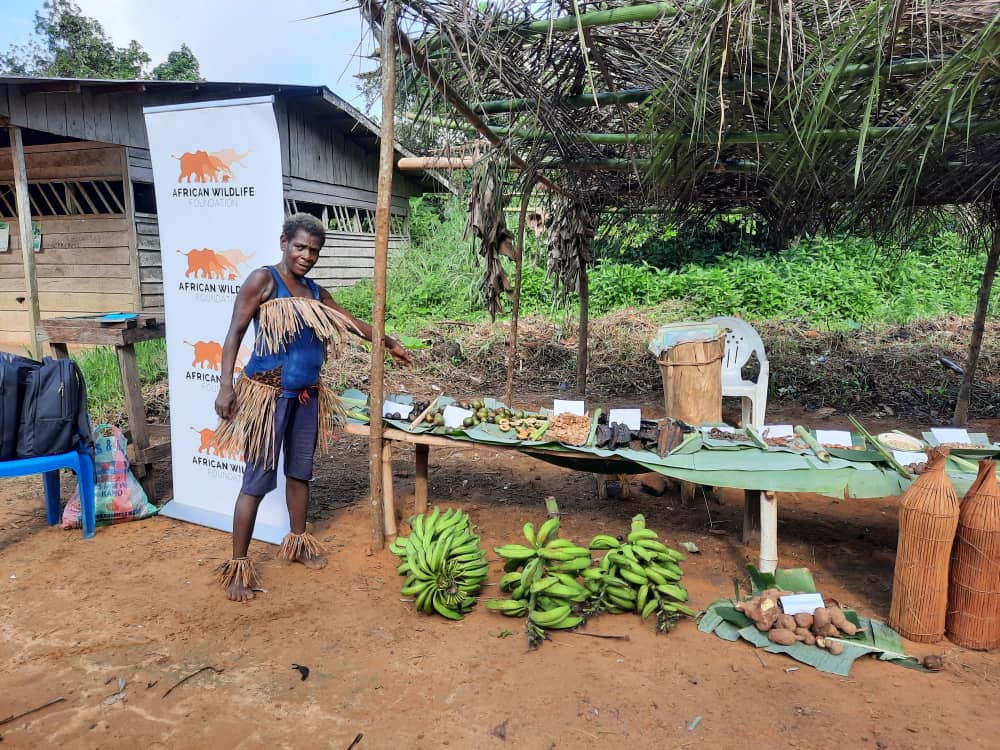
A Bagyeli Indigenous woman displays medicinal plants and harvested crops.
As we celebrate World Wildlife Day 2026, themed “Medicinal and Aromatic Plants: Conserving Health, Heritage and Livelihoods,” the story of the Bagyeli community in southern Cameroon offers a powerful example of the connections between wildlife, plants, and people.
Deep in the lush forests of Campo Ma’an National Park, spanning 264,000 hectares—more than three times the size of New York City—wildlife thrives alongside Indigenous knowledge. The park is home to forest elephants, gorillas, chimpanzees, and more than 80 other mammal species. But beyond iconic wildlife, Campo Ma’an holds another treasure: medicinal and aromatic plants that sustain both community health and cultural heritage.
Nature’s Pharmacy: Conserving Health
For centuries, the Bagyeli, an Indigenous minority community, have relied on the forest for medicine. Their herbal remedies treat ailments ranging from childhood illnesses, stomach disorders, diabetes, hernias, and chronic injuries, to reproductive health challenges and infections.
This knowledge is not just tradition—it is a living, functional health system. Each plant, each harvest, is carefully timed and managed to ensure regeneration.
Wildlife plays an essential role in this green pharmacy. Elephants disperse seeds over vast distances, gorillas and chimpanzees scatter fruit seeds, and over 300 bird species contribute through pollination and seed dispersal. This natural interplay ensures that medicinal and aromatic plants continue to flourish, forming the backbone of community health and resilience.
“The forest is our life. When elephants walk, they plant our medicine. Without animals, the plants cannot survive, and without plants, our traditions cannot continue,” says Jean Daniel Ndongo, a respected Bagyeli guardian of the forest.
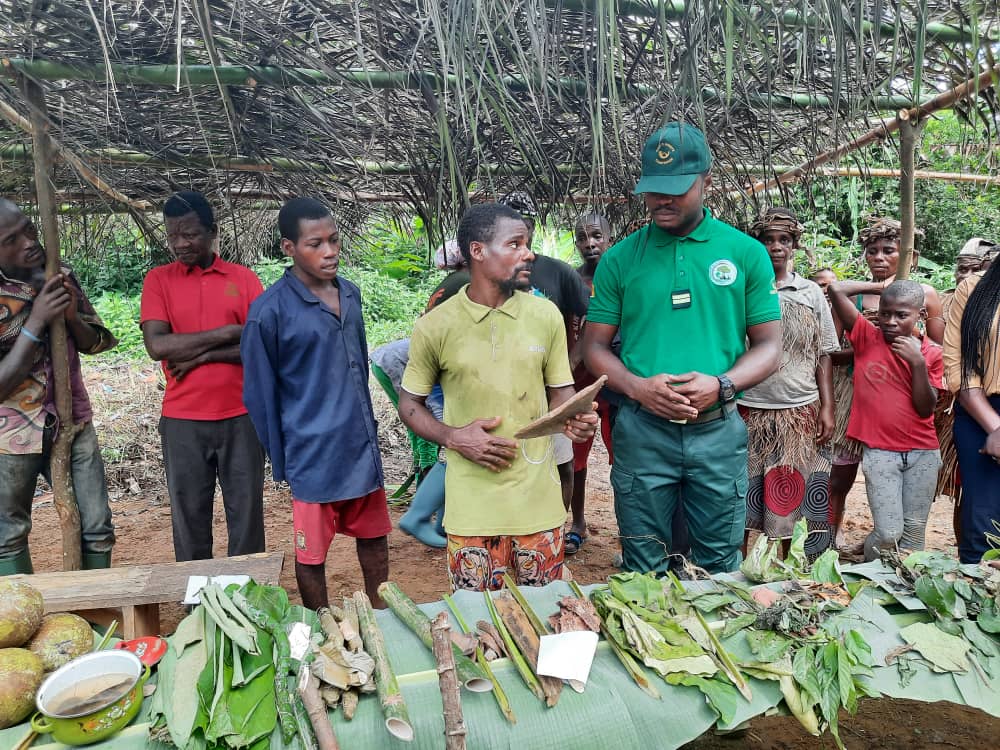
Jean Daniel Ndongo explaining the benefits of a plant to an eco-guard.
Living Heritage: Conserving Cultural Identity
For the Bagyeli, medicinal and aromatic plants carry profound spiritual significance. Many species are central to rituals, ceremonies, and cultural identity.
Recognizing the importance of these traditions, the Government of Cameroon has granted the Bagyeli continued access to the forest for customary practices. This ensures that conservation supports—not replaces—Indigenous knowledge and heritage.
Their story is a living reminder that protecting plants is inseparable from protecting the communities that have nurtured them for generations.
Livelihoods Rooted in Biodiversity
The African Wildlife Foundation (AWF) supports the Bagyeli across nine villages surrounding Campo Ma’an—Nyamabandé, Nkolmelen, Nkongo, Ngola, Bomlafenda, Nkolakae, Nkol-ekouk, Ako’ozam, and Lobé—strengthening both conservation and livelihoods.
AWF initiatives include:
- Ranger support and habitat protection
- Biodiversity-friendly farming
- Community nurseries cultivating fruit trees and medicinal plants
These efforts reduce pressure on wild harvesting while sustaining traditional knowledge. As wildlife populations recover, ecological cycles strengthen: more elephants and apes mean richer plant diversity; more birds mean stronger pollination.
In turn, the forest’s pharmacy grows stronger, and the Bagyeli can continue using plants for medicine, food, and spiritual practices—linking ecological health directly to human well-being.
A Diet Sustained by Nature
The Bagyeli diet celebrates the forest’s abundance. Staples like gnetum (okok), forest peanuts, wild yams, and breadfruit are complemented by wild mango, ndjansang, and kanda. Even cassava, adapted into their cuisine using maranthaceae leaves, reflects innovative use of forest resources.
This culinary knowledge is part of their cultural heritage, passed from generation to generation, demonstrating the inseparable link between plants, nutrition, and community identity.
Campo Ma’an: A Model for World Wildlife Day
Campo Ma’an National Park is more than a biodiversity hotspot. It is a living example of how conserving medicinal and aromatic plants safeguards health, heritage, and livelihoods.
“Protecting animals is inseparable from protecting plants, and protecting plants is inseparable from safeguarding the Bagyeli’s heritage. When Bagyeli families cultivate fruit trees and medicinal plants, they reduce pressure on the forest. This allows wildlife to rebound, and the wildlife regenerates the plants communities depend on,” explains Jacques Massussi, AWF’s Landscape Manager.
Through collaboration between AWF, the Bagyeli, and the Cameroonian government, the park demonstrates a holistic approach to conservation—one that values both ecological integrity and Indigenous knowledge.
Celebrating the Green Pharmacy
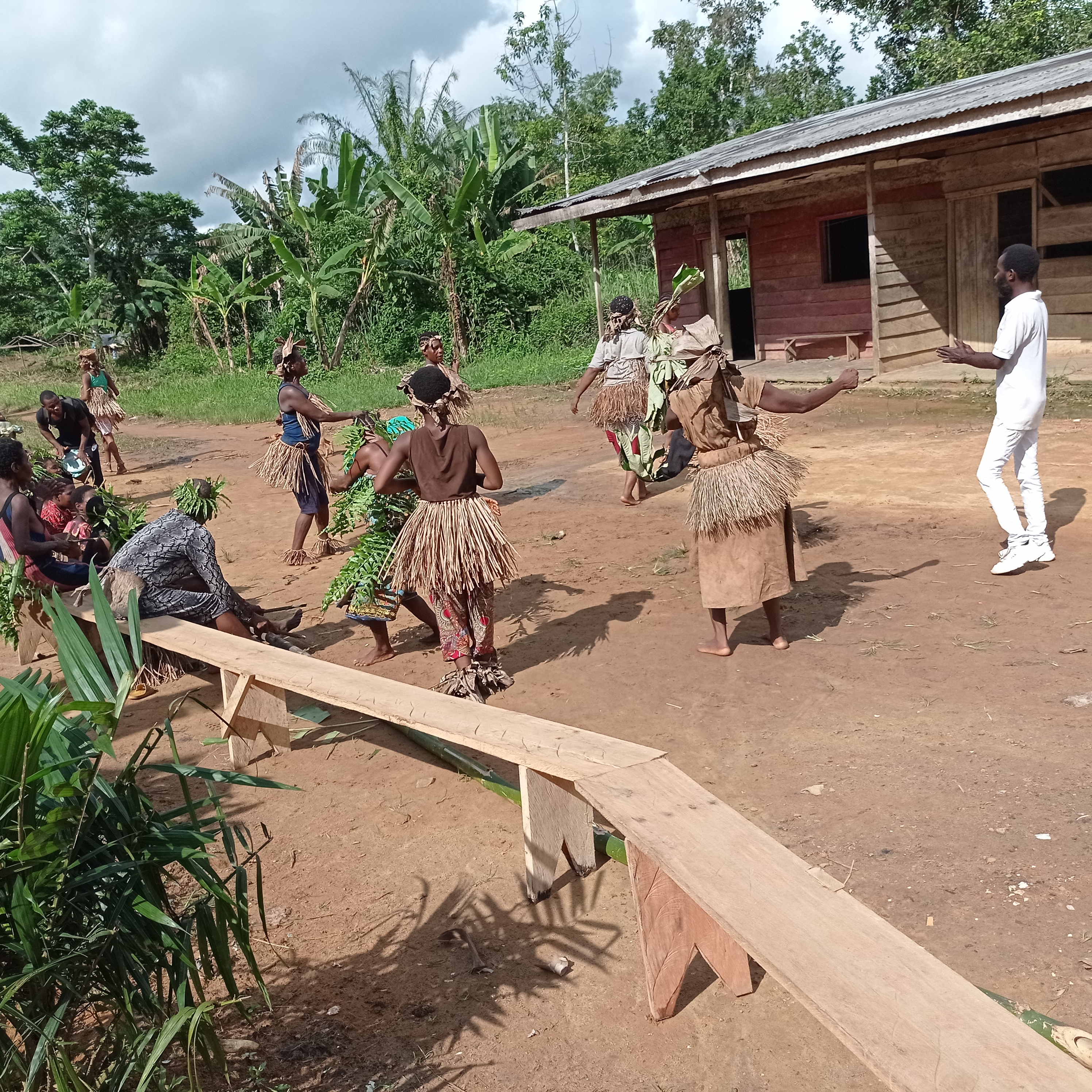
A Bagyeli Indigenous community celebration.
As we mark World Wildlife Day 2026, the Bagyeli remind us that medicinal and aromatic plants are more than resources—they are bridges between ecosystems and people, between heritage and the future.
Conserving them means conserving:
- Health: Ensuring communities can continue to access traditional remedies.
- Heritage: Preserving Indigenous knowledge, cultural identity, and spiritual practices.
- Livelihoods: Supporting sustainable economic opportunities rooted in biodiversity.
Campo Ma’an stands as living proof that protecting wildlife, plants, and people is not a series of separate actions—it is a shared, interconnected journey.