In the Hardest Places, Conservation Is Holding the Line
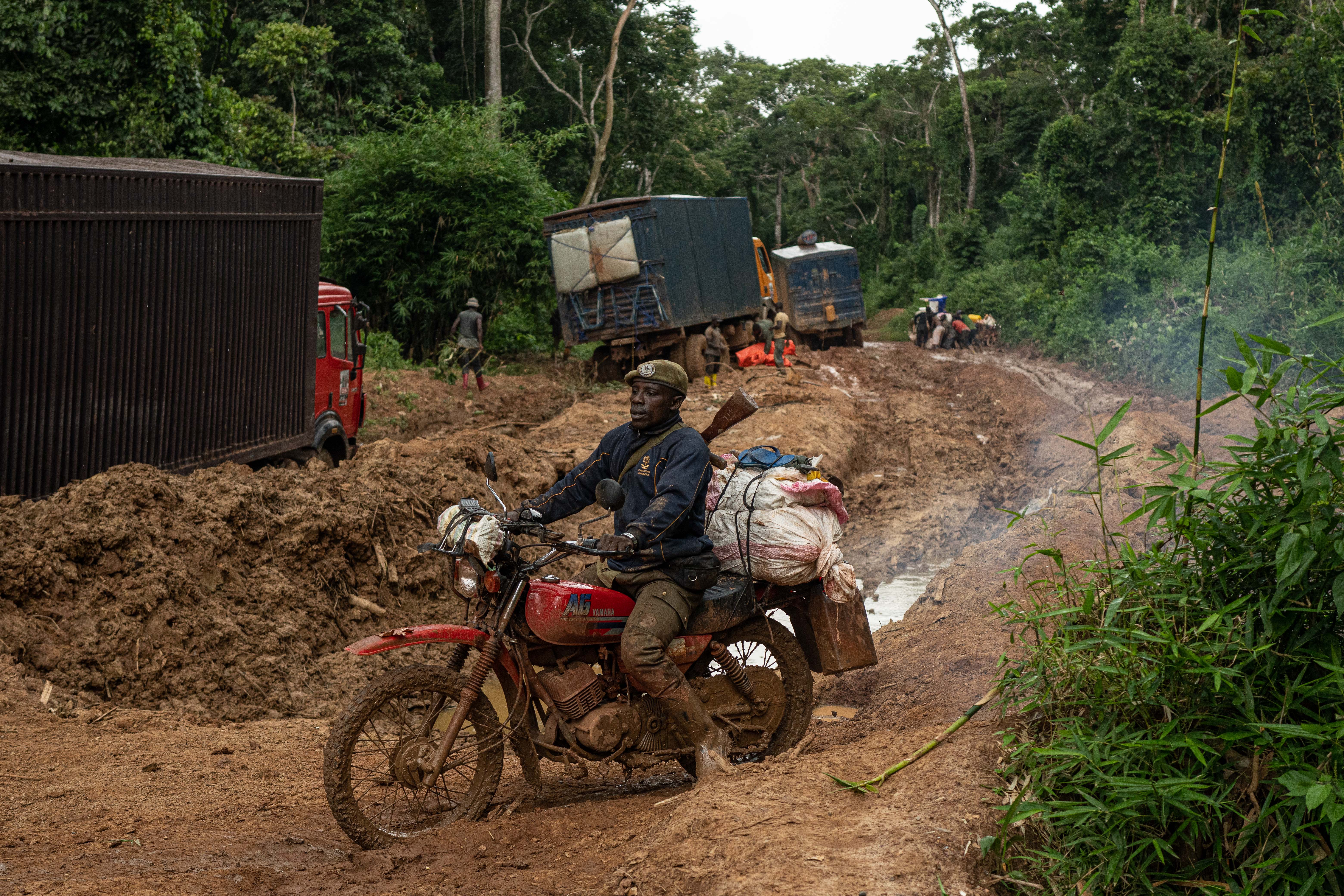
A section of road between the Bili-Uélé landscape and Buta, the provincial capital of Bas-Uélé.
This story is drawn from AWF's 2025 Annual Report—Seizing the Moment—which documents a pivotal year for conservation across Africa. Working in the most remote and complex landscapes on the continent, AWF is demonstrating that community ownership, rights-based approaches, and sustained on-the-ground presence can deliver lasting results even where the odds are most challenging. Read the full report at annualreport.awf.org
There are places in the Democratic Republic of the Congo (DRC) where conservation happens largely out of sight. No major tourist lodges. No well-worn safari circuits. Just vast, extraordinary wilderness, some of the world's most biodiverse ecosystems, and communities whose connection to their natural heritage runs deeper than any external program could manufacture.
Bili-Uélé is one such place. Located in the far north of the DRC, on the edge of the Congo Basin rainforest, it is a patchwork of protected areas, hunting reserves, and community land that abuts some of Africa's most volatile conflict zones. Access to electricity and the internet is rare. The nearest city is two days away. And yet, the value of what remains here—chimpanzees, forest elephants, and vast tracts of intact forests—is extraordinary.
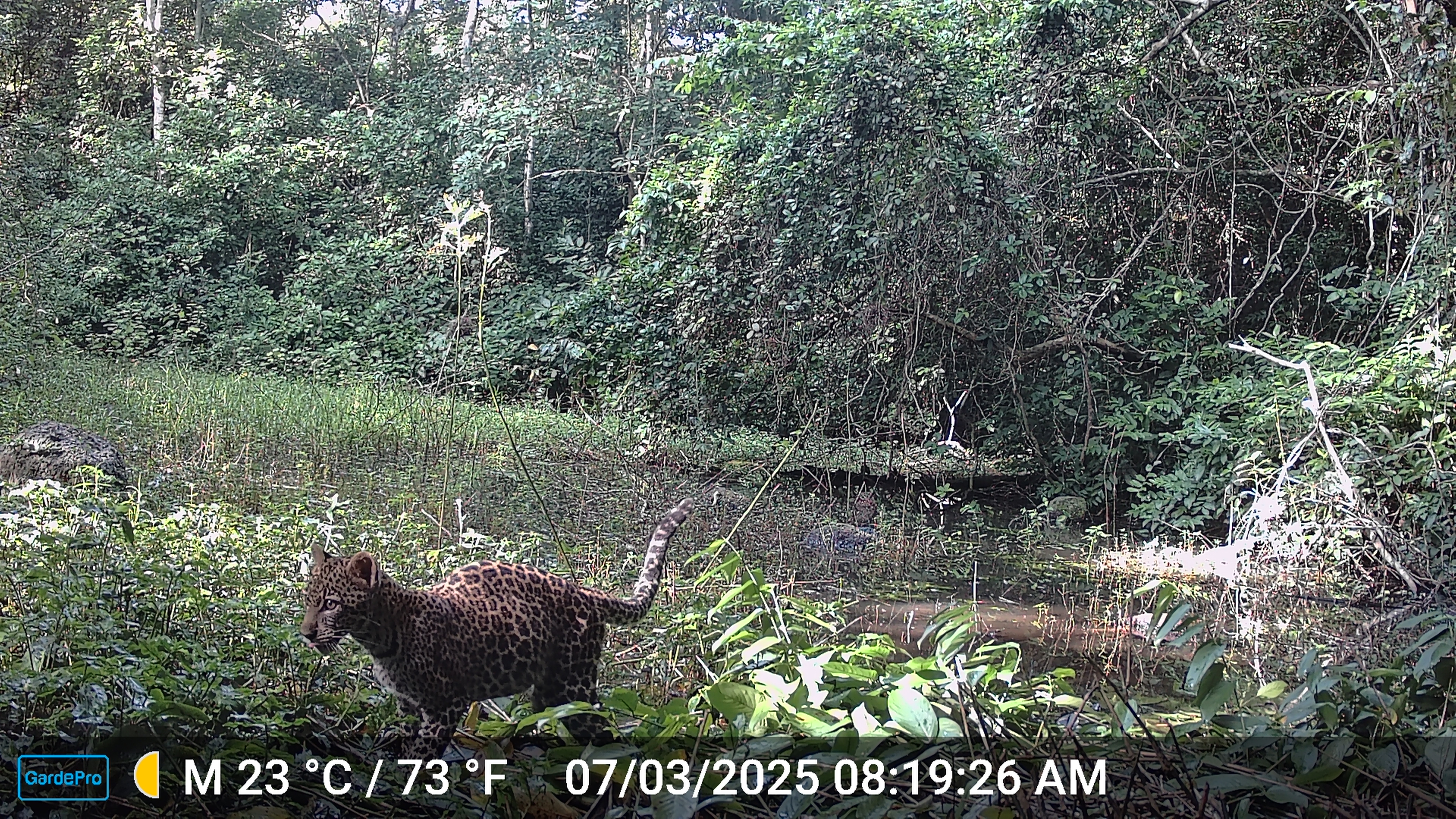
A Leopard seen with a camera trap in Bili-Uélé.
This year, AWF made significant strides in the landscape's core zone, the Bili-Mbomu Central Zone. Patrol teams expanded surveillance and consolidated control over key areas, recovering illegal weapons, dismantling traps, and rescuing trafficked wildlife. Camera traps deployed across priority habitats returned early signs of increased wildlife presence and natural regeneration following reduced livestock pressure in sensitive zones.
But the story that perhaps best captures what is changing in Bili-Uélé is the story of Ardo Moussa. A herder who left the Central African Republic in 2017, Moussa came into conflict with local communities after moving his cattle into Bili-Uélé. AWF's TANGO program—originally developed in northern Cameroon's Faro landscape, where it has reduced herder-farmer conflict by 62 percent—has now been introduced in DRC, bringing herders and communities together through structured dialogue and culturally informed mediation.
That shift in understanding—from conflict to shared custodianship—is the actual work of conservation. It cannot be manufactured by decree. It takes time, trust, and sustained presence on the ground.
In Maringa-Lopori-Wamba, another remote DRC landscape and a critical stronghold for bonobos, AWF renovated the Ilima school as part of a forest conservation agreement with the local community—creating a hub for environmental education for the next generation of forest stewards. Five major community conflicts were successfully resolved this year through a new grievance mechanism established as part of rights-based conservation work.
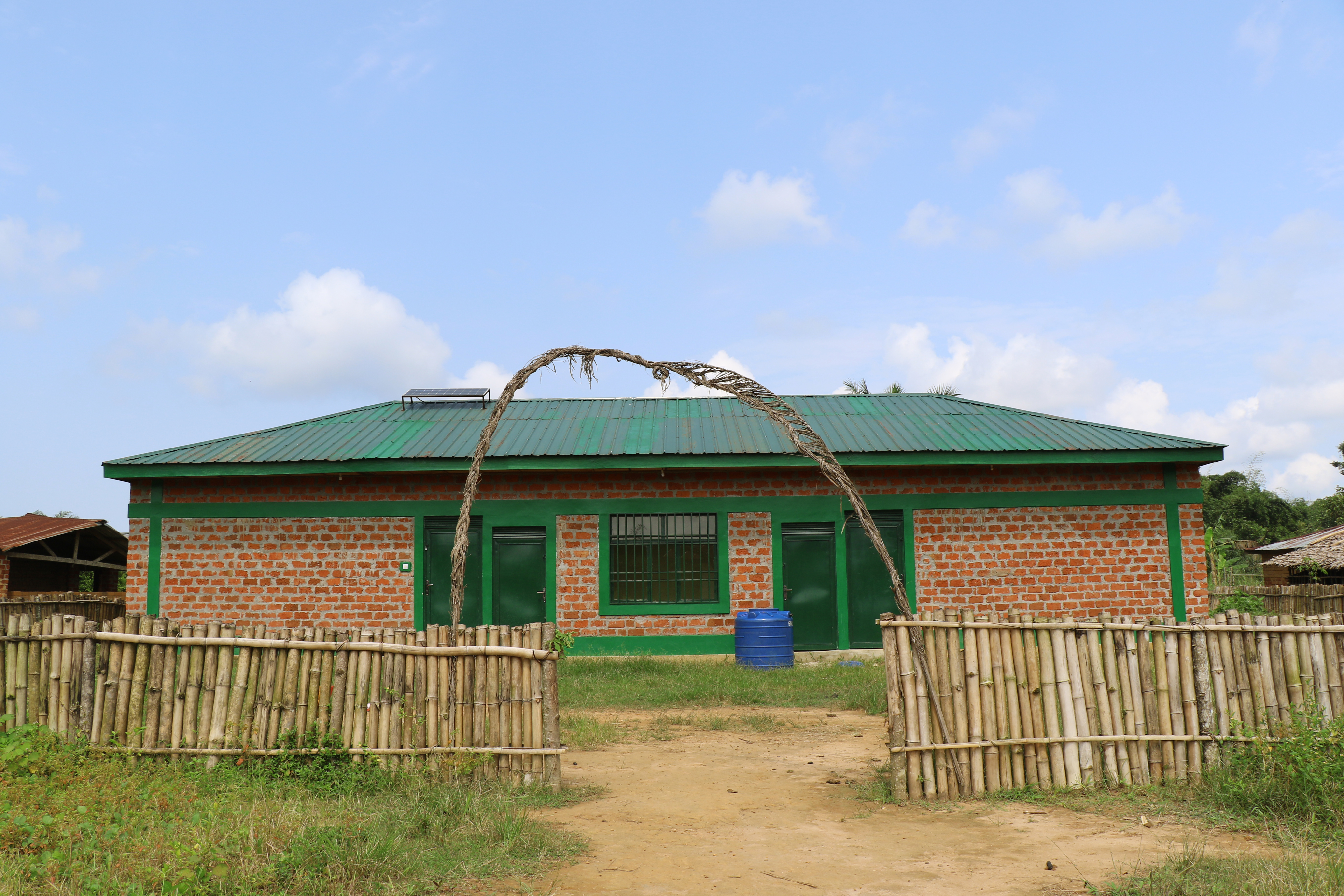
A new business incubation center constructed in Boonia, Maringa-Lopori-Wamba landscape.
A new business incubation center in Lomako is now complete, offering skills development and enterprise support to women and youth in a region with limited economic infrastructure. Where livelihoods are weak, conservation is fragile. Where communities thrive, forests follow.
In the hardest landscapes, the work continues.