AWF Joins Partners to Launch GEF-Funded Project Protecting Northern Uganda’s Shea Landscape
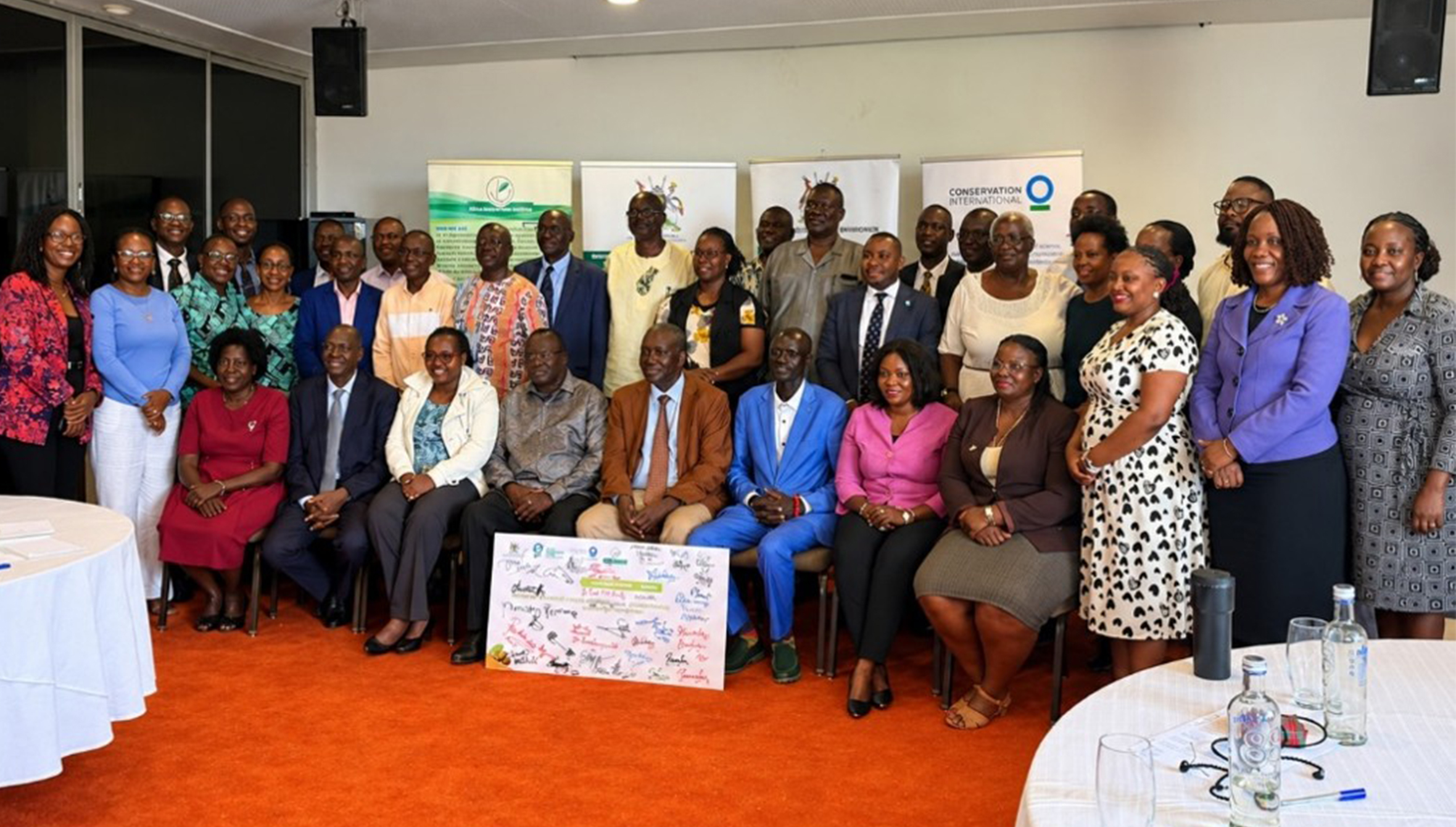
Participants and partners at the launch of the GEF-funded project: Building a Climate-Resilient and Sustainable Shea Landscape of Northern Uganda. © AWF
General Inquiries
Tel:+254 711 063 000
Ngong Road, Karen, P.O. Box 310
00502 Nairobi, Kenya
Building a Climate-Resilient and Sustainable Shea Landscape of Northern Uganda brings together conservation, climate adaptation and enterprise, with communities in the lead.
KAMPALA, Uganda – The African Wildlife Foundation (AWF) joined government institutions, conservation organisations, private-sector actors and community representatives to launch a five-year, Global Environment Facility (GEF)-funded project: Building a Climate-Resilient and Sustainable Shea Landscape of Northern Uganda. The launch took place at the Kabira Country Club in Kampala, hosted by Uganda’s Ministry of Water and Environment (MWE), in partnership with Conservation International (CI) and the Africa Innovations Institute (AfrII).
Funded through the GEF Least Developed Countries Fund (LDCF), the project runs from 2026 to 2031 across Agago, Kitgum, Otuke and Pader districts. It is backed by a GEF grant of US$6.68 million and a further US$24.9 million in co-financing. The project aims to reach 4,320 direct beneficiaries, of whom at least 52% will be women and at least 30% youth. It will also bring around 4,500 hectares of shea-growing landscape under climate-resilient management.
Protecting Shea Trees and Biodiversity
At the heart of this landscape stands the indigenous shea tree (Vitellaria paradoxa subsp. nilotica), which is central to northern Uganda’s ecology, culture and economy. Beyond yielding the nuts used to make shea butter, it enriches the soil, sustains vegetation cover and provides habitat for wildlife.
Yet the tree is under growing pressure. Charcoal production, agricultural expansion, uncontrolled bushfires and climate change are all taking their toll, while seasonal income shortages and insecure land and tree tenure compound the threat. The project will respond through sustainable land-use planning, protection of existing trees, natural regeneration and landscape restoration.
Creating Alternative Livelihoods
Protecting the trees, however, depends on the well-being of the people who live alongside them. The project will therefore develop at least five climate-smart livelihood pathways, including sustainable beekeeping, agroforestry and value-added shea processing. Together, these will diversify household incomes and give communities a compelling reason to protect standing shea trees rather than cut them for charcoal.
The shea value chain also offers room to grow well beyond raw nuts and butter, into locally made cosmetics, skincare products and soaps. Local entrepreneurs showcased their shea-based products at the launch, offering a glimpse of this potential. Building on that promise, the project will work with 15 private-sector enterprises and micro, small and medium enterprises (MSMEs) to strengthen processing capacity, market access and commercialisation, with a particular focus on women and youth.
“Lasting conservation in northern Uganda will only happen when local communities are directly in the driver’s seat,” said Rose Ssebatindira, AWF Country Director for Uganda. “By embedding Free, Prior and Informed Consent (FPIC) into our spatial planning and conservation agreements, AWF is ensuring that protecting the Nilotica shea tree goes hand-in-hand with securing rural livelihoods. When communities see real economic value in standing trees, both biodiversity and local enterprises thrive together.”
AWF’s Role in Community-Led Conservation
This vision of communities in the driver’s seat shapes AWF’s contribution. AWF will support the project’s climate-resilient livelihoods and access-to-finance components, focusing on community-based conservation agreements, participatory land-use planning and technical restoration planning.
Using spatial analysis and ecological assessments, AWF will help identify and prioritise restoration areas, so that interventions respond to both environmental pressures and community needs. Working with communities, district local governments and traditional institutions, AWF will then support climate risk-informed land-use plans that balance agriculture, livestock grazing, shea regeneration, ecosystem restoration and sustainable resource management.
Community ownership will anchor all this work. Guided by the principles of FPIC, AWF will facilitate community consultations and co-design workshops, support the negotiation and validation of conservation agreements and raise awareness of the commitments communities choose to make.
The launch reinforced a central message: lasting conservation requires environmental protection and sustainable economic opportunity to advance together. For AWF, this work reinforces its commitment to community-led conservation and to restoring degraded landscapes, helping to secure a future where people and wildlife thrive together.
Learn more about AWF’s conservation work in Uganda at www.awf.org/where-we-work/uganda
For Media Inquiries, contact: Eileen Kairu, Strategic Communications Manager, [email protected]